Gnomes

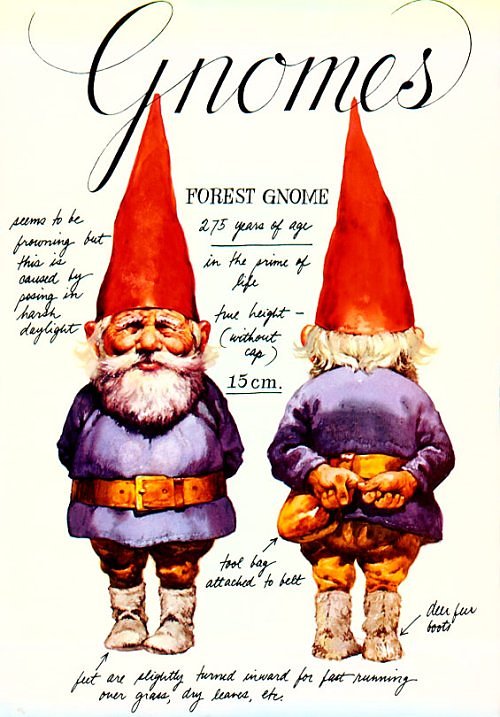
I really like gnomes. When I was a kid, my mom owned this book:

To say that my sister and I were obsessed with this book, is an understatement. We read the entire thing cover to cover about a hundred times and then we set out to look for gnomes. Our favorite gnome hunting grounds was at my grandparents house in New Hampshire. They live up in the mountains near the Canadian border and every picture you take looks like something that belongs in The Lord of the Rings or The Hobbit. We used to look for “gnome holes” in the trunks of trees for hours.We would scour the ground for “signs” of gnome activity and every now and then we would swear we saw a flash of a red hat.

Gnomes was not the only source of information for our obsession. We also watched the television program “David The Gnome” religiously. If you did not experience this program on Nickelodeon growing up, you missed out. Here’s the intro to the series:

The second clip is from the series finale. As my sister said, “I wept like a child.” Well, we were children.

After all of this, it seems fitting that for Christmas my sister gave me a giant, red ceramic gnome. We also received not one, but two of these:

We now have three Steeler’s gnomes in our yard.

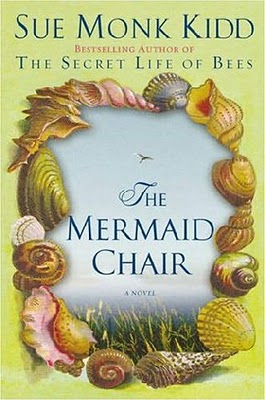
The Mermaid Chair

Over the summer my mom and her friends threw me a shower. The theme was a literary tea, and it was awesome. As favors, we got to pick a book to take home. I picked up The Mermaid Chair by Sue Monk Kidd. The books were all donated, so I don’t know whose book this was, but once again I was intrigued by the art on the cover*.

I also have a thing for mermaids. When the Disney version of The Little Mermaid came out, my mom took my sister and I to see it twice. I knew all the words to “Under the Sea” and “Kiss the Girl” and Ursula scared the living hell out of me. When I got older, I read Hans Christian Andersen’s original version, and I cried. When my family and I go to the Outer Banks in North Carolina on vacation, I always pause over the mermaid knick knacks. I even bought a beautiful handmade card with a mermaid on it. I still haven’t sent it to anyone. Needless to say, it is not surprising that a book titled The Mermaid Chair caught my attention.
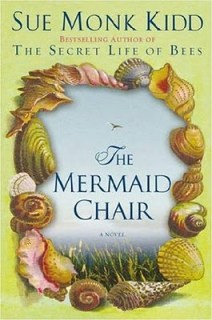
For those of you who read my posts about Juliet, Naked and The Girl in the Garden, you probably think I’m starting to sound like a broken record, but yes, friends, I liked this book too. Once again, we have a strong female lead and once again, she is flawed and confused. She is really confused. This is also a love story. There is a love triangle between the main female character, Jessie, her husband, and Jessie’s lover, Brother Thomas. That’s right, he’s a monk. That is the first twist of a few that come in the story.

Admittedly, the plot is laid out neat and clean for us right from the beginning as Jessie narrates in the prologue:

In the middle of my marriage, when I was above all Hugh’s wife and Dee’s mother, one of those unambiguous women with no desire to disturb the universe, I fell in love with a Benedictine monk.

I always admire when novelists pull this trick out of the hat early on in a story, because when you reveal your main conflict this early, you have to have some pretty stellar writing stashed up your sleeve to maintain the reader’s interest. Kidd does a good job of filling in careful, necessary details about Jessie, her husband Hugh, and a string of other important characters, including Brother Thomas. She also sets the story in the lush, ethereal albeit fictional, Egret Island. If you’ve spent anytime in North or South Carolina, you’re going to feel at a sense of familiarity immediately. If you have not spent anytime in North or South Carolina, you’re going to want to go immediately upon finishing the novel.

The main conflict in this book is really the internal turmoil that Jessie feels. What Kidd does so well is she gives words to a fear that I think a lot of women feel once they’ve settled comfortably into their lives and I think that’s the fear of losing oneself. We all spend a lot of time when we’re teenagers standing in front of the mirror and asking “who am I?” This continues into college when we stand in front of the same mirror, although this time we’re inebriated on cheap beer or box wine. I don’t think this question ever goes away, but we learn to avoid it or even scarier, we talk ourselves into the fact that we’ve figured it all out. Jessie thinks she knows who she is until something happens that just blows that identity all to hell. I found myself relating to her early and at the same time thinking, dear lord, how do I keep that from happening to me? But therein lies the rub because you can’t prevent it, so you might as well try to learn something from it, which is exactly what Jessie does.

This is the part of the blog post where I wave at my new husband and say “Don’t worry, honey. I’m not going to run off with a monk!” I mean, this isn’t the Thornbirds. However, it did get me to thinking about other books that I’ve read where something similar has happened to a female character. The first one that comes to mind is the mother in the novel The Lovely Bones (another good book). After the death of her daughter, the mother seemingly abandons her family for a period of time. However, I think the term “abandon” is a cynical term. She does leave her husband and two surviving children but not because of malice, but because of guilt. She failed to protect her daughter and that failure haunts her for the better part of the story. You could say that Jessie abandons her daughter and husband as well, but I guess what Kidd points out, and this is true of all stories fictional or not, is that it is never that simple.

What I also liked about The Mermaid Chair, is that it examines the idea of grief. There is a lot of loss, new and old, in this book and all the characters are grieving and recovering at their own pace. Healing is a long process and this book demonstrates just how long it can take someone to forgive not only another person, but also to forgive themselves.

Add The Mermaid Chair to your reading list. It’s a provoking and engaging story and it will make you think.

The Girl in the Garden

I don’t usually pick books by their covers because that’s no way to pick a good book. There are plenty of  compelling tales that don’t have particularly interesting covers. Catcher in the Rye, The Bell Jar, Beloved & Breakfast of Champions are a few of my own books that come to mind. Great stories but the covers (at least on my editions) are not that exciting. However, when Borders announced that it was going out of business and started to close stores in Indy, my husband and I began to circle the shelves with all the other book vultures. We made several trips to several different Borders in the city and the result of one of those trips was a hard cover copy of The Girl in the Garden.

As I type this post, I just am now realizing that when I bought this book, I was listening to Florence and The Machine’s album “Lungs” pretty much non-stop. My favorite track on the album is #12 “Blinding,” which contains the lyric “No more dreaming of the dead as if death itself was undone/
No more calling like a crow for a boy, for a body in the garden.” I know that this is not exactly the title of the book, The Girl in the Garden, but that might have had something to do with the purchase. The second reason was the cover:

Peacocks are lovely. 

The third reason is that the book is set in India and is written by an Indian author. I happen to have read every word Jhumpa Lahiri has ever written and I went and listened to her when she gave the keynote address at AWP last year. I love her beautiful descriptions and her interweaving of Indian culture into her stories, so I thought I might like Kamala Nair’s debut novel.

At the risk of sounding cliche, I couldn’t put this book down. I started it Thursday night around 8:30 and I finished it Friday night around 9:00. The imagery is gorgeous and if you’re a sucker for that kind of writing, which I am, you’re going to eat this up. Trust me. From the beginning of Chapter 4 when our narrator, Rakhee, and her mother arrive in India:


I stayed close to her side as we wove through the sweaty throng to identify our baggage so it could be transported to our connecting flight. Children darted by swift as multicolored arrows. Unsuppressed body odor invaded my nostrils. All around us, barefoot women dressed in identical saris swept the dusty floors, stopping over their long bristled brooms like agile, purple winged insects.

And later, when Rakhee and her mother arrive at the family home, Ashoka:

Rough weeds rose from the earth and encircled my bare ankles as I tumbled over the wall and landed on the other side. I brushed the dirt from my knees and got to my feet. It was not so scary now, in broad daylight. The trees and bushes shone an electric green. I glanced up. The branches of the tallest trees bowed under the weight of their leaves, forming an arched ceiling above the forest floor, and I felt as if I had entered a church. Through the intricate, screenlike pattern of leaves I could see patches of bold blue sky with not a cloud in sight.

The story is also intriguing. There are a lot of characters to keep track of and at first that can be a little overwhelming, but Nair does a good job of balancing narrative with all of this beautiful imagery. As our protagonist, Rakhee is compelling and we are immediately endeared to her brave, wise character. She is smart and perceptive and incredibly frustrated with the adults in the story. This is a plot built around secrets and they reveal themselves slowly, so it makes it extra hard being a child narrator. However, the story is not all doom and gloom either. This is a story about love, specifically about the love between families and how it has not only the power to destroy relationships, but also the power to heal them.

It’s a beautifully written book and a fast read. If you like stories about families and strong female characters, check it out. And it has a great cover.

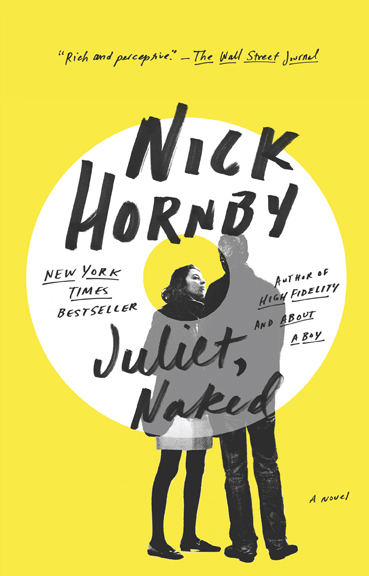
Juliet, Naked

I like it when people give me books to read. I especially like it when said book proves to be as enjoyable/inspiring/well written as the recommender has promised. I’ve become a bit weary of recommendations as of late just because I’ve had a few duds. However, last night I finished reading Juliet, Naked by Nick Hornby and I think it has restored my faith in book recommendations.

My sister* lent me this book and inside she wrote the following note “Washed up musicians and quirky British characters. One of my favorites.” Have I also mentioned I like it when people write notes in books? It’s neat. This is why I like buying books from second hand bookstores but I digress.

Most people are familiar with Nick Hornby because of the movies that have been made from his books. These include High Fidelity and About a Boy. I enjoyed both of these films and I’ve read a couple of other of Hornby’s pieces, so admittedly I had some expectations.

Cool covers are a plus.

I’m like most readers in the respect that I like characters I can relate to. I also like smart, funny writing. I think Hornby succeeds in both these areas in Juliet, Naked. I was immediately endeared to the main protagonist, Annie, when a few pages into a description of Annie’s long term relationship, we get this nugget:

The decision not to have children had never been made, and nor had there been any discussion resulting in a postponement of the decision. It wasn’t that kind of sleepover. Annie could imagine herself as a mother, but Duncan was nobody’s idea of a father, and anyway, neither of them would have felt comfortable applying cement to the relationship in that way. That wasn’t what they were for. 

I like the frankness of Hornby’s writing and I like when author’s write about flawed relationships in a way that doesn’t make the reader cringe, but instead makes them want to read more. While it is true that there is a fair dose of melancholy in this passage, there is also some irony. They don’t want to cement their relationship? They’ve been together for fifteen years. At this point was isn’t left to cement? Well, it turns out quite a lot as the story goes on.

I also love smart, humorous writing. I tell my creative writing students that humor is the most underrated tool among authors. Everyone wants to be so serious all the time and talk about “what does it all mean?” You are certainly allowed to do that and Hornby tackles some tough issues in this book: motherhood, romantic relationships, dysfunctional families, deadbeat dads & alcoholism just to name a few. However, all of these issues are surrounded by a hilarious, obsessive narrative about a washed up rock star. The book opens with Annie and Duncan taking a pilgrimage to honor this “star,” Tucker Crowe. The opening scene begins with:

They had flown from England to Minneapolis to look at a toilet. The simple truth of this only struck Annie when they were actually inside it: apart from the graffiti on the walls, some of which made some kind of reference to the toilet’s importance in musical history, it was dank, dark, smelly and entirely unremarkable. Americans were very good at making the most of their heritage, but there wasn’t much even they could do here.  


As an American who spent about six months in England, I also appreciate the slight jabs that Hornby makes at our great nation. They’re not mean spirited but the fact that the biggest f*ck up in the book is American is amusing in and of itself. Then there are just the little gems that make me snicker out loud. This was one of my favorites:

The night before, Duncan had come home late and smelling of drink; he was monosyllabic, curt even, when she’d asked him about his day. He’d fallen asleep quickly, but she had lain awake, listening to him snoring and not liking him. Everyone disliked their partners at some time or another, she knew that. But she’d spent hours in the dark wondering whether she’d ever liked him. 

Does it get much more relatable? This story is interesting and quirky and the characters are kind of hopeless but their story is not. Despite all of their hangups, and believe me there are a lot of hangups, you will laugh with them, you will sigh for them and ultimately you will hope for them.

*Thanks Ash!

The Life and Times of an Unknown Poet…

I finished electronic submissions this past weekend and I just completed hard copy submission packets for everyone else who has yet to give into the ease of submission managers. I’ve completed 50 submissions total and I’ve already received three rejections (electronic submissions can make the rejection process a lot quicker), so I have or will soon have about 47 submissions out in the world.

I’ve encountered something during this round of submissions that I’ve never encountered before: anxiety about sending poems to people I know. The universities where I received my MA and my MFA also house two very well respected literary journals and I’m a little ashamed to admit that I’ve been avoiding sending to them. Actually, as long as I’m being honest, I’ve avoided sending to any places where I know the editors are former peers or mentors. I know this makes no logical sense and it’s not like I fear rejection or criticism (I mean I went to school for poetry for crying out loud) but maybe I do fear it from people I know and respect. This may be oversimplifying it a little bit. I just seem to feel a slight twinge when writing certain addresses on submission envelopes…

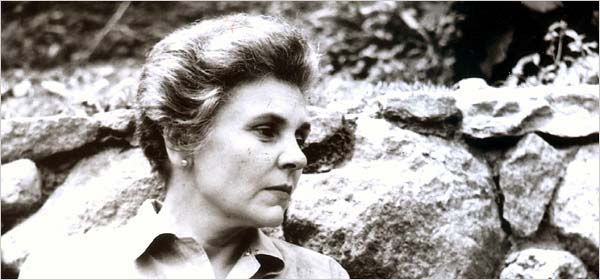
I’m reading two different books right now. One is Jonathan Franzen’s The Corrections and the other is Elizabeth Bishop and The New Yorker. In a way, it isn’t really fair that I’m reading these two books at the same time. I love Elizabeth Bishop and I’ve read just about every conceivable thing by her or about her. This recent edition from the New Yorker is delightful and where most people would find reading pages of letters tedious, I really enjoy it. I’m never going to get meet Miss. Bishop but I can hear her voice in her letters and her conversation. It’s as close to a dialogue as I’m ever going to get, so I’ll take it.

On the other hand The Corrections is challenging and the verdict is still out whether I’m enjoying the challenge or not. I found the beginning of the book intriguing but odd, but as I move further into the novel I’m having trouble deciding if I’m still intrigued or just annoyed. I know I missed the boat on this book in terms of timeliness. Most of my friends jumped on Franzen’s bandwagon along time ago, but I’m going to finish it and then I’ll comment in full.

The days are lengthening and the sun seems to be making its presence known more and more often. I noticed the tips of some green shoots pushing through the leaf beds. Spring break is just around the corner and I look forward to spending some time working on my chapbook manuscript and working through some new poems that are bumping around in my head.

Last night I didn’t sleep well. This usually happens when I have a lot going on and can’t keep my mind still. When I did finally slip off into sleep, I had dreams of poetry and lines and words. Spring brings rejuvenation in many forms.

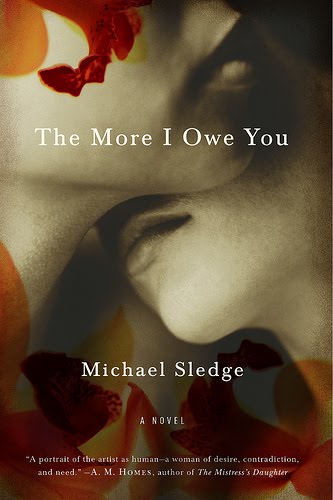
The More I Owe You

Among the many tasks I’ve set for myself in this new year to help me reclaim my writing life (I certainly lost track of it in 2010, especially the second half) is to read more. So far, I’ve done a pretty good job. I’m up to date on my New Yorkers, I’m almost caught up to the January issue of Poetry and I’ve read three books since Christmas. The third book I just finished not three minutes ago and I think it’s worth a few words. The book in question is called The More I Owe You by Michael Sledge and I believe I heard about it on NPR several months ago. The book is a fictional account (rooted in real life events) of the life of Elizabeth Bishop and her lover Lota de Macedo Soares.

Elizabeth Bishop was the first poet that I really heard and she is a large part of the reason that I started to write and that I still write. Whenever I feel like my poets have lost the ability to see, I go back to Bishop. I love her and I will greedily consume her in any way that I can.

Reading this novel brought out the poetry nerd in me first. I loved how Sledge started weaving Bishop’s work into her travel narrative almost immediately. For a reader that is intimate with her poetry, it is like a poetic treasure hunt to go through this book and pick up on the allusions and references that eventually became some of Bishop’s most famous poems. At points the prose is achingly beautiful and exact, just like Bishop’s own verse. I was expecting this precision in language, because honestly, I don’t know how you write a book about Elizabeth Bishop without laboring painfully over each word.

What I was not expecting was the exquisite sadness that I encountered in the pages. While I admired and obsessed over Bishop’s poems, I also read her personal letters and interviews. I knew she struggled with family trauma and alcoholism. I knew she wasn’t perfect. I didn’t want her to be. I didn’t need her to be. However, this book puts a spotlight on her loneliness and then amplifies that loneliness by pairing her with a woman, Lota, who is even more lonely and even more desperate for validation then she is.

This is not to undermine their relationship. There is much joy and beauty in this novel as well, but it is always boiling with tension just below the surface. When I read the final scene when Lota overdoses, I felt my heart tighten. These women struggled and clawed and fought to find each other in the world, only to lose sight of what was most important at the very end.

This book also offers glimpses of other relationships that serve as foils for Lota and Elizabeth. The most famous seems to be Robert Lowell who makes one disastrous appearance after another until he leaves Elizabeth once again alone on a street corner in Rio.

It is a love story and a beautiful one at that. There are missteps and betrayal and rage on the part of both women, but they are also brilliant and vibrant and creative. This book makes me long to know them and go walking with them along the beach in Brazil or sit in Lota’s beautiful Samambaia and drink coffee. This will never happen of course, but in his pages, Sledge is able to give a very personal, very beautiful portrayal of a woman who some accused of being closed off or removed. This novel proves that she was anything but.

The Kindle, Sexism, and Dracula

I got a Kindle for Christmas. My dad purchased them for all of us (mom, sis & fiance). Opening it was a mixed bag of emotions at first. My reactions ranged from “Cool! A new literary toy!” to “Oh shit! I’m contributing to the downfall of print literature.” I’m aware this is ridiculous.

The long and short of it is: the Kindle is cool. I like that you can loan books. I like that books are cheaper to download on the Kindle. I like that when I think or hear of a book I want to read, I can add it to my wish list and then download it. I like that I can make notes and annotations on the Kindle. Will I ever stop buying paper books? Does the sun shine in the sky? Please.

One of the aspects of the Kindle I like the most is you can download classics for free, so over Christmas I read Dracula. It was enjoyable; however, I was struck by the contradictory roles of women in the book. The two main female characters Mina and Lucy, are annoyingly traditional and yet interestingly progressive at the same time. For instance, before Lucy has the misfortune of becoming a vampire, she enjoys the attentions of three separate suitors who desire her hand in marriage. She talks about each of them, in detail, in a letter to Mina. Her view of them and how she handles their proposals reminds me a little bit of Sex & The City. She’s an attractive, intelligent capable woman who can have the pick of the litter. However, at the same time the way the men treat her in the book is very stereotypical. It is obvious Lucy is tough. She braves the transformation of becoming a vampire, she puts up with her dying mother and she manages to deal with strange incidents of sleepwalking and waking nightmares. However, the men in the book treat her like some sort of wilting flower. I mean, she’ the waking dead for crying out loud.


This is even more apparent in Mina’s character. After all of the men in the book come together for the common purpose of hunting down and destroying Dracula, they realize they need to organize all of their written accounts. Who volunteers to do this? Mina. She’s brilliant and as far as I can tell, a lot more organized than any of the men. However, even before she falls victim to Dracula herself, there is a constant (almost irritatingly constant) discussion about whether she should be spared the details of their quest for this fanged phantom. This is the only part of this book that I find ridiculous because it seems to me that if Mina has the strength to deal with her husband, Jonathan’s, terrible ordeal, the loss of her best friend Lucy, and the ravings of Renfield, she can probably hear about travel plans.

Despite all of this, I do enjoy this book. I like the way Stoker used diary entries and incorporated different viewpoints into the story. I also love reading a book about vampires that does not mention the names Bella, Jacob or Edward. Me? I’m on team Bram.

Spring Musings

This past weekend kicked off my spring break from teaching and I think this might be the best spring break I’ve had in years. I’ve gotten a lot done around the house the first half of the week and plan to work on writing the second half. My sister was in town for her birthday (March 7th) so that was a fun way to kick off the weekend.


___________________________________________________________________

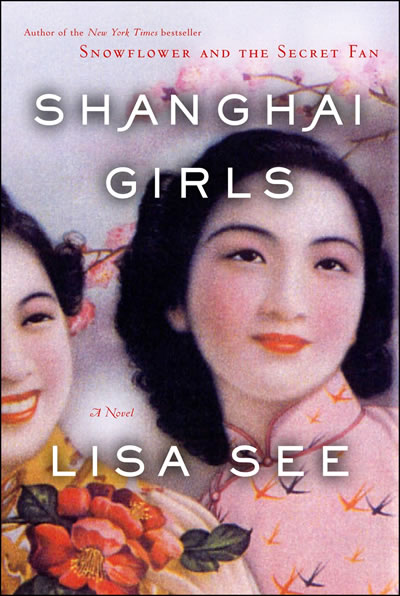
I finished reading Shanghai Girls for our book club this month. I think it’s going to be an interesting book to talk about in terms of structure and content.

My initial impressions of the book are mixed. I’m not the type of person who needs a neat and tidy ending (I won’t spoil it for those of you who’d like to read it), so I actually liked the symbolism of the continuing cycle of the generations that came into play at the end of story. I also liked the story of the two sisters. I felt Lisa See’s portrayal of May and Pearls’ relationship was honest and candid. The two characters were written very well. However, the overall style of the writing, for me, seemed disjointed. I think because this is a historical novel, the historical parts of it seemed heavy handed at times. The balance between the narrative and the historical fact didn’t always work. For example, you’d be caught up in a deeply personal scene between characters and then all of a sudden a fact about the Japanese invading China or the Japanese bombing Pearl Harbor would sneak in. It took me out of the narrative. I suppose it is possible that Lisa See did this on purpose to mirror the disruption the characters were feeling in their own lives due to these conflicts, however it doesn’t seem consistent enough to be considered technique.

I think my biggest problem with the plot itself is that I already knew everything about the sisters as a reader. In the final climactic moment of the story, as everything comes to a head, I already knew about their flaws, so as they revealed them to each other, I just felt bored.

I am looking forward to discussing this book with my colleagues at school. Who knows my opinions may change…
____________________________________________________________________

What would you do if someone invited you to their death? When I was in 10th or 11th grade I dabbled in speech in debate for a very short time. The subject of my speech? Euthanasia. Even in my teenage years when I didn’t know anything, I felt that it should be a person’s right to die. This was before I watched my aunt be ravaged by ovarian cancer. Before my grandfather was diagnosed with lymphoma. Before nineteen year olds were diagnosed with breast cancer. This was before I became aware that it cost over two million dollars to treat colon cancer in this country.

Chuck Palahniuk published “Live Like You’re Dying” in MensHealth. In this article he recounts attending a dinner party where he didn’t know the outcome was death until the guests were asked to join hands and light candles. Check out the article. It will give you some food for thought.

Starting of 2010

I started my week off waiting for the water company to come out and read the meter. This morning I had good intentions to go to school early but that was before our kitchen sink backed up. Now, I’m sitting in my living room listening to the plumber snake the kitchen sink and thinking about all the work I have to do for school. Oh well.

Note: I’m not encouraged by the fact that the plumber is on his third go at snaking the drain and I think I just heard him mutter “you’ve got to be shitting me.”
_____________________________________________________________________

I didn’t officially make any New Year’s resolutions this year because I feel like mine are always the same: take better care of myself, write more, read more, and manage my time better. I’m going to just keep chipping away at these goals right now. I think they’re solid.

I have a couple of poems bumping around in my head but I’m still thinking them through. I also need to start thinking about more submissions. 2009 was a pretty typical submission year. I sent out 65 plus submissions and got accepted to one journal.

I’m starting on Moby Dick tomorrow…

The Poetry Society of America is hosting this exhibit in New York City called “Portaits of Poets 1910-2010” I’ve been following the development of the exhibit through Facebook and Twitter. I’d love to go and see it but I think I’ll have to settle for the pictures provided by the New York Times:

Artists and poets have always kept close company, and the alliance becomes a celebratory bash in “Portraits of Poets, 1910-2010,” an exhibition presented by the Poetry Society of America at the National Arts Club beginning on Tuesday. The kickoff event of the society’s centennial year, the show brings together more than 150 portraits of 20th-century poets, many by well-known artists, and the guest list is formidable.

And the drain is fixed…

Thursday (Zora) Musings

I wrote a poem about Zora Neal Hurston this morning. Their Eyes Were Watching God is one of my favorite books of all time, and while I was on vacation, I picked up a few postcards of author’s I liked from this little bookstore in Manteo. This is one of the first of my “writing” mornings where I did not come to school with an idea for a poem already in mind, so I was looking around my office and I started thinking about Ms. Hurtson and her book and there was my poem.

Our new dean came into my office a few weeks ago and remarked over the picture of Hurston on my wall. She and I had a brief conversation about the famous scene (recreated below) and how students often missed the obvious sexual implications:

She stretched on her back beneath the pear tree soaking in the alto chant of visiting bees, the gold of the sun amd the panting break of the breeze when the inaudible voice of it all came to her. She saw a dust-bearing bee sink into the sanctum of a bloom; the thousand sister-calyxes arch to meet the love embrace and the ecstatic shiver of the rtee from root to tiniest branch creaming in every blossom and frothing with delight. So this was marriage! She had been summoned to behold a revelation. Then Janie felt a pain remorseless sweet that left her limp and languid.

It is beautiful writing and the book is full of moments like this.
_______________________________________________________________________

I am taking six students to Stratford Ontario (along with another staff member) for the Shakespeare Festival. We’re leaving October 23rd and returning October 25th. The interest in the trip is tremendous so far, and I’m looking forward to experiencing this great opportunity with some of our students. Therefore it seems appropriate that this sonnet came across my path the other day:

Sonnet 15

Not marble, nor the gilded monuments
Of princes, shall outlive this powerful time;
But you sha;; shine more bright in these contents
Than unswept stone, besmear’d with sluttish time.
When wasteful war shall statues overturn,
And broils root out the work of masonry,
No Mars his sword not war’s quick fire shall burn
The living record of your memory.
‘Gainst death and all oblivious enmity
Shall you pace forth; your praise shall still find room
Even in the eyes of all posterity
That wear this world out to the ending doom.
So, till the judgment that yourself arise,
You live in this, and dwell in lovers’ eyes.

William Shakespeare