There are times in teaching where it is important to hold a hard line. When you are enrolled in one my courses you are learning about fiction and poetry and nonfiction. You are also learning about grammar and sentence structure and style. In addition to all the academic material, you are also learning organization, responsibility and accountability. You will come to class prepared. You will participate. You will complete the in-class and out of class assignments. You chose to be here, so it is up to you to make it work. I will do everything in my power to help you succeed, but at the end of the day, you have to do the work. And it is hard work.
Author: bripike
Revise, Revise and Revise…
I’ve been working on revising several poems that I drafted about a year ago. This is pretty typical for me. I think of an idea, I write a first draft, sometime a second or third and then I let it sit for “awhile.” Sometimes it’s just a few days, sometimes a few weeks or months and sometimes it’s a year. The good news is that I have a lot of ideas. The bad news is that finished drafts can be slow in coming to fruition.
![]() |
| Rust + Moth Autumn 2013 |
Unexpected Garden
![]() |
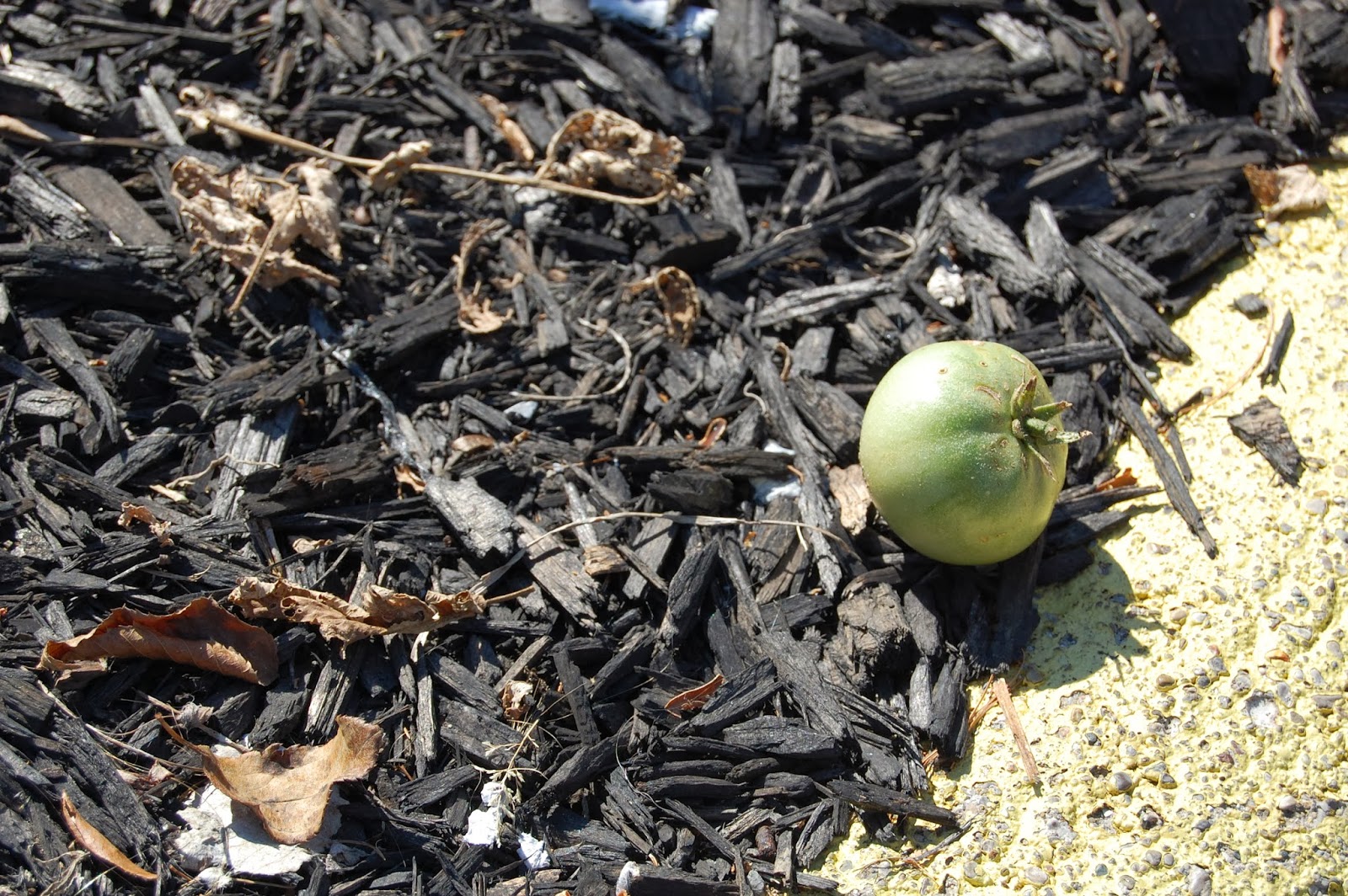
| Vegetable garden behind The Legend in Irvington. |
Teaching Lessons: Always Be Willing to Try Something New
When I got my first job as an adjunct at the community college where I am now full time faculty member, I was not at all prepared. I learned to be flexible and “roll with it” fairly quickly, but the learning curve was steep to say the least. One important lesson I learned very early on was not to be afraid of new ideas, technology, or formats when it came to teaching. In the year and half I spent as an adjunct (2007/2008) these are some of the “new things” I tried:
- Blackboard
- 8 week courses
- 12 week courses
- Guest speakers
- Student Presentations
- Group Presentations
- Computer Labs
- Power Point Presentations
- Using media in class (video & audio)
- Using supplemental material outside of the required textbook
- Using film
- Becoming a faculty advisor for a student creative writing group
- Subbing for other English courses/instructors
- Incorporating creative writing techniques into my comp courses
- Copy editing the student lit mag, New Voices
- Mentoring new adjuncts
- Using short stories for the in class essay assignment. Among my favorites were The Lottery, The Yellow Wallpaper and A Good Man is Hard to Find.
- Using Annie Dillard’s opening paragraph from A Pilgrim at Tinker Creek to introduce the narrative essay assignment.
- Using movie/music reviews from The New Yorker to introduce the evaluation essay assignment.
- Requiring students to pick a local non profit as the subject for their evaluation essay.
- Requiring students to interview a faculty member to practice interview skills for evaluation essay.
- Requiring students to prepare a 5 minute informative presentation over their research paper topic. This included a brief power point presentation, so they could learn what and what not to do.
- Using current periodicals such as The Atlantic, The New Yorker, Nature, The Christian Science Monitor, etc to find topics for their research paper.
- Creating an evaluation guide for online sources (still fairly new territory at the time)
- Creating APA Guides and worksheets
- Developing an annotated bibliography assignment

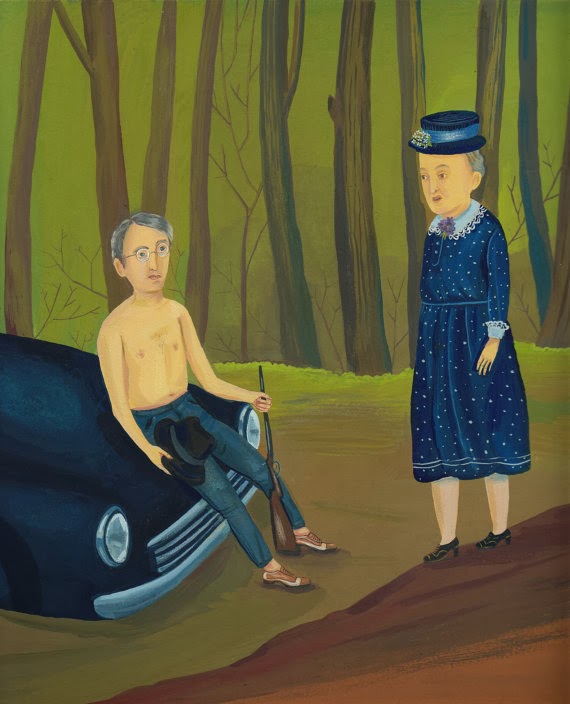
A Good Man is Hard to Find by Giselle Potter
- Committee work
- Online classes
- Academic panels and/or presentations
- Participating in some professional development activities (cooking class & faculty book club)
- Advising for Phi Theta Kappa
- Working with the Honors College
- Re-writing English 111 (comp)
- Attending conferences
- Organizing events for National Poetry Month
- Co-advising for our student lit mag, New Voices
- Continuing to advise for our creative writing group, The Blank Page
This entire post is sparked by yet another new endeavor I am embarking on this spring. I will be teaching a section of Honors World Lit I on a new platform. This new project is allowing me to design a course using brand new technology, which means I have to learn said technology. Today, I had a meeting with course designer who is my partner in crime on this project, and I left the meeting feeling a tad overwhelmed but mostly I felt excited to start something new.
The face of education is constantly changing, and as a result, the role of the professor in the classroom is also changing. However, I would argue that instead of becoming less important, as some people seem to fear is the case, I think we are becoming more important. That being said, we need to be willing to stretch and learn along with our students.
Poetry About Loss
The Academy of American Poets defines the elegy as follows:
![]() |
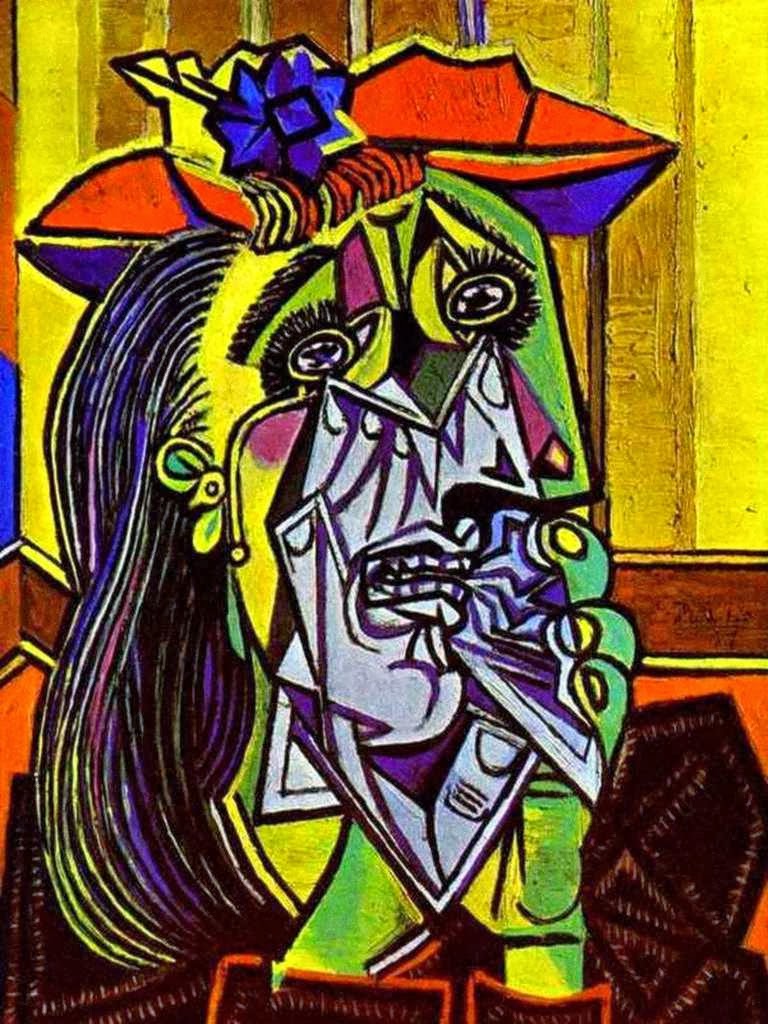
| Weeping Woman, Pablo Picasso 1937 |
I know that many poets use words to work through loss and difficult times. Confessionalism, which I discovered through the poetry of Sylvia Plath and Anne Sexton, emerged from the idea of writing as a coping mechanism. Of course the poems of Plath and Sexton are more than just therapy, but I guess I never really realized how much I used my poetry to process loss until fairly recently. I’ve written about the loss of family, animals, and even bigger losses like Costa Concordia.
A Day Spent At Home Writing
I’ve spent the entire day at home revising poems, reading poetry and occasionally asking my fuzzy pup, Kweli, if he thinks a certain line or word sounds right. He has very discerning taste. My two Zebra Finches, Humphrey & Pip, just chirp at me whenever I speak to them.
What a lovely day it has been to stay in my house and work. Actually, this week overall has been pretty great. Two fellow poets from Murray had work published this week: Karissa Knox Sorrell & Pamela Johnson Parker. These are wonderful poems and you should read them.
Creative Writing Exercises: Teaching from Image
In addition to my regular course load at my community college, I am a faculty advisor for our student run creative writing group, The Blank Page. I started the group when I was still an adjunct and students approached me looking for another venue in which they could share and improve upon their own work.
Haunted Houses provides a unique way of understanding our relationship to the spaces we inhabit, and reflects romantic and dystopian notions of the domestic realm. The notion of hauntedness activates and highlights the home, revealing the hidden narratives and possibilities of everyday life.
Botz went about taking photographs and collecting oral recitations of the ghost stories that go along with some of the photographs. You can listen to the stories here. The photographs are gorgeous and the stories are very interesting. I was even more intrigued by this project when I learned that one of the locations and stories took place in Girard, PA which is about ten minutes from Fairview, PA where my parents still live. This is the photograph from Girard:
![]() |
| “Farmhouse, Girard, Pennsylvania” from the series Haunted Houses, 2010 |
Anyway. When I looked through the pictures, I thought they would make great prompts for my Blank Page students, so this afternoon we spent about half an hour free writing over selected images from Botz’s project. After we had finished writing, we debriefed a bit and the student response seemed positive. The general consensus seemed to be that the images provided specific details that the students could latch onto and use as a starting place for a poem or piece of prose. I’ve done this exercise for units on character, setting and story and I think Botz’s photographs are perfect inspirations for writers.
Also received word last night that three of my poems will be appearing in Rust + Moth.
Hamilton Stone Review
My poem “Wigs” went live this morning at Hamilton Stone Review. Thanks to Roger Mitchell for giving this poem a home. Take a look and make sure to read the other fine writers featured in this issue.
Rejection Letters: Taking Notes on a Poem
When I was deeply immersed in my first graduate program working on my MA in creative writing, I became aware of the concept of “good” rejection letters and “bad” rejection letters. These letters (now mostly emails) were associated with the literary journals we were sending our poems out to at the time. “Good” rejection letters contained notes from the editor or readers. These notes could be just a few words of encouragement or a request to “try us again,” but the most coveted of notes contained actual comments about the poem or poems you’d sent in. Admittedly, I’ve had more of the first type of “good” rejection letter, but in the past year or two I’ve received a few notes about my actual poems. Of course this puts me in the somewhat awkward position of trying to decide whether I’m going to apply these notes or not. Case in point, I received some notes on a poem last winter that basically stated that the tone of the poem seem muddled. This particular poem had been through an extensive revision process both in and out of workshop, and I wasn’t really sure there was much more I could do to make the tone clear. I thought about it for a few months and then decided to leave it be. This poem has recently been accepted for publication.
I feel that this example of the good/bad rejection letter really just opens the conversation up to the question of when to accept to critique and when to trust your gut. I know this is a constant point of conversation in my creative writing classes, especially because many of my students are brand new to the concept of workshop. I always tell them to take what is useful and constructive and leave the rest. The worst thing that ever comes from a suggestion is that you try something that doesn’t work. At least you know you tried, and in trying, you learned something.
In other news, I learned my poem, “Vigil,” will be appearing in an upcoming issue of Grey Sparrow Journal. All good things.
A Beautiful Day in the Neighborhood…
![]() |
| Left to right: Peanut butter swirl cookie from Roll With It Bakery; Sidewalk on University; one of the many great houses in Irvington; garden outside of The Legend. |