Wherever you are today, find some light. Be well & take care of yourself.
This poem first appeared in Issue #19 of Grey Sparrow Journal.
bripike@gmail.com
Wherever you are today, find some light. Be well & take care of yourself.
This poem first appeared in Issue #19 of Grey Sparrow Journal.
It should come as a surprise to no one that I talk too much to post these via Instagram, which was my original plan, so instead I’ll share them here and then link to Facebook.
This first poem, “Forsythia,” appeared in Issue 10 of Glassworks, which is a great journal. In addition to each issue, they also do a feature called looking glass, where I got to talk a little about this poem.
Happy first day of National Poetry Month, folks. I hope you’re well wherever you are.
These are strange times. As I type this blog post, I am sitting in my living room, listening to NPR and reading my school email. I have not been to school in almost three weeks (I think?) and I don’t know when I’ll return.
Just now, BBC World News via NPR, declared that “America must brace for 100,000 or more people to die” as a result of Corona Virus.
It is also April 1st and spring is on its way. My lilac bush is leafing out more every day. My daffodils are nodding their bright yellow heads and my tulips are beginning to bud.
It is also the start of National Poetry Month and I am still writing, quite a bit so far, in this strange, uncertain time. I know I am going to write for National Poetry Month, but I’m not going to put any parameters on myself, rather I may work through a prompt if it moves me or I may just free write. I’ve been keeping a diary of sorts since I learned I would be home for the rest of term. I know there is definitely material there to mine for poems.
But I also want to reach out because it is easy to feel lonely and isolated when you can’t leave your house.
So for National Poetry Month 2020, I’m going to make a short video of myself reading one of my poems for each day during the month of April. If I’m being honest, I’m doing this as much for me as anyone else. I have no expectations regarding this little project at all. It gives me something to do, something to look forward to and something to share and that’s really all I’m looking for.
I’ll be posting them here each day and then sharing the to Facebook, Twitter & Instagram. I’m not operating on a schedule of any kind, but I hope to get one up a day starting today.
Love to all of you wherever you are. Be well.
Recently I’ve been writing these hybrid/lyric essay, poem like pieces. Honestly, I’m not really sure what they are, but I like them. The journal I read for, The Indianapolis Review, recently released a special double issue exclusively featuring poets and artists from Indy.
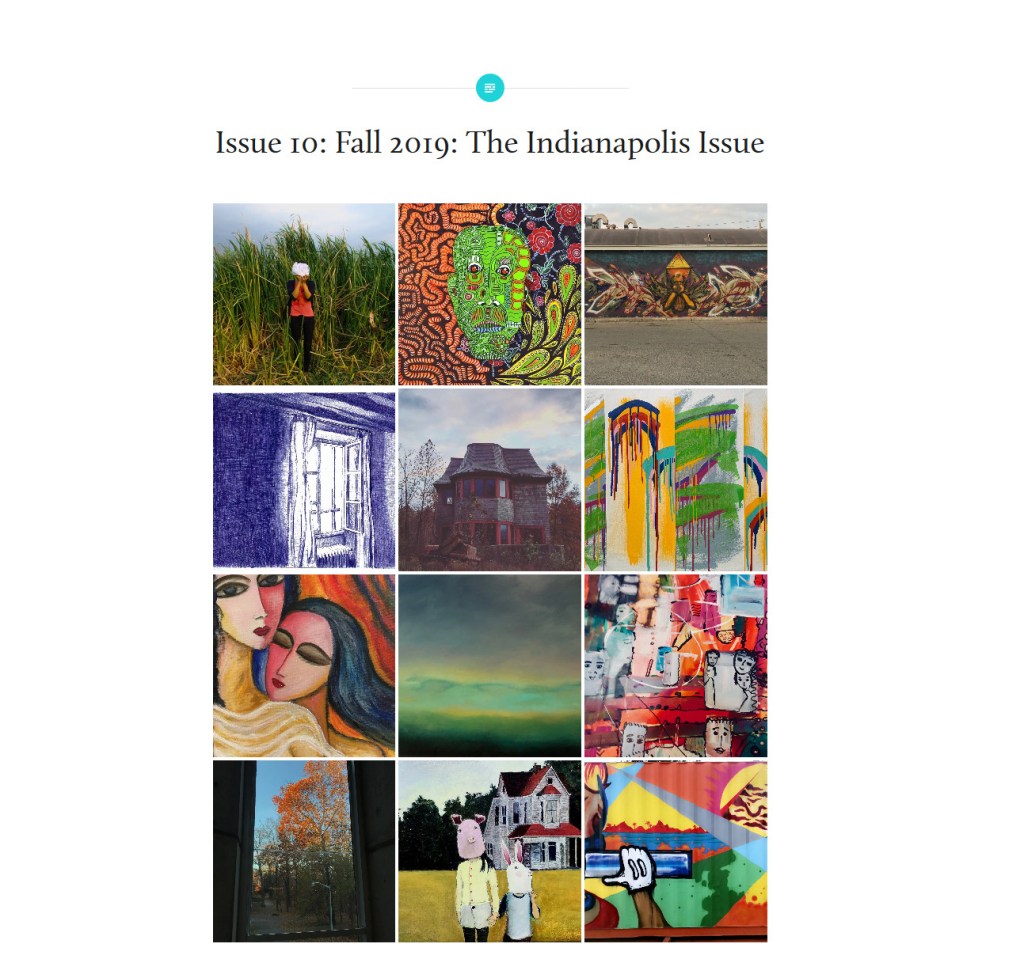
My piece, I Am Thinking About Love, is included in this wonderful issue and was also featured in multi genre art exhibit put on by the Fine Arts Department at my community college. You can read my piece and the rest of this fabulous issue HERE.
My little essay, I Am Thinking About Flowers, is in the newest issue of JuxtaProse and it’s a special one. First it is about my Grammy, who I loved dearly. She died in January. Second, it is the FIRST piece of writing I’ve ever received monetary compensation for, so that’s a thing.
If you remember, awhile back I participated in a project called Poetry Has Value and while I submitted to some paying markets while involved in that project, I never received for payment for any poems, even though I had a some acceptances. It’s not lost on me that this piece is not a poem (although I’d categorize it as a lyric essay, so it’s close), but I won’t let that diminish my joy.
Many months ago The Rumpus posted an open call for essays that examined the topic “mothering outside the margins.” I thought about the prompt for a few days and then early, around five am, one Saturday morning I sat down and wrote a 1200 word essay about my experience as mother in the first few months of my son’s life.
It came out quick and fervent and I admit, I was a little surprised, but I also knew I had a lot to say. I spent about a week or so tweaking it and then sent it off before I could think too hard about it.
Ultimately, though my little essay made it the final round for the “mothering outside the margins” call, it didn’t make the final cut, but I was encouraged by how close it came to publication, so I sent it to a few other places and soon enough the editors at Utterance sent me an email letting me know they’d decided to publish it. Unfortunately, that journal is no longer in print, but you can read my essay in full below:
Small Betrayals
1
My son did not enter life by my push. He was pulled through the slim red lips of a wound that opened across my abdomen like a hungry mouth.
2
He is small, so small his entire body fits in the space between my wrist and elbow. He is so small he has to visit the pediatrician every week for weight checks. He is so small that his newborn onesies billow around his tiny body like giant pastel sails. He is so small that the hat knit by my dear friend, his “go home” hat, envelopes his entire head in red wool. The wool is same color as his face scrunched tight as he screams.
3
The lactation consultant visits my room on the second day of his life. I am exhausted from an unexpected car accident that brought an unexpected c-section that brought this unexpectedly tiny baby.
We work on latching. I remember her saying, “he knows where the nipple is,” as if this was some sort of accomplishment. I just nod and smile, feeling his tiny chest move against mine like a second heartbeat.
The next time she comes, the last day we’re in the hospital, she brings nipple shields. She helps me attach these plastic discs to my breasts, assures me they will do the trick because my son “knows where the nipple is.”
By the end of the following week the slick smell of that plastic makes me nauseous.
4
My son never latched onto my breast. He latched onto the aquamarine egg of my engagement ring, his fingers ghosting over mine, seeking the brilliant flash and holding on.
5
He is hungry all the time. His mouth opens dark angry wet with every cry for more. I cradle his tiny body in one arm and press his mouth to my breast as my husband helps with the pump.
No milk.
He is starving.
His rage is primal.
No milk.
Nipple shields slip from my sweating fingers; the breast pump squats on coffee table, watching, waiting, useless. I try again.
No milk.
He is starving.
At some point my husband says, “Babe, why don’t we make him a bottle?”
At some point we are back in the pediatrician’s office for yet another weight check.
At some point the kind doctor, his deep voice filling every corner of the exam room says, “It’s formula. Not swamp water.”
At some point we give him his first bottle and when he closes his eyes and begins to suck the quiet sound is its own kind of ecstasy.
6
I watch Spring turn to Summer from my living room window. I watch our Redbud tree leaf out deep green. I watch a small fledgling wren fall from the eaves of our porch and sit on the ledge while his mother swoops worms into his mouth.
I walk the floors of our small bungalow in a thick, white fleece coat even though it is pushing eighty degrees outside. The air conditioning blows from the vents, turning my fingers to ice as I circle the living room, into the dining room, through the kitchen and back.
He is still hungry. He is still hungry all the time. We walk and he eats and we walk and he eats and we walk and he eats and we walk and he eats and we walk.
My shoulders ache from holding his still too small body in the same position. Tendonitis flares up in my right wrist, hot and pulsing as I shift his head from shoulder to forearm and back again.
My husband leaves us everyday. He goes to work and comes through the back door every afternoon in a wash of summer sun.
Days shift in the shadows the sunlight casts through my living room window.
We walk and he eats and we walk and he eats and we walk and he eats and we walk and he eats and we walk.
7
Loneliness is my husband rolling over to touch me in the middle of the night. Loneliness is feeling his hands at my back, my hips, my abdomen.
My abdomen that is still a gaping wound that bleeds.
Loneliness is the want that builds between the two of us as our son sleeps just a few feet away.
Loneliness is the pull of clothes, the tear of a condom wrapper and the smell of latex. Loneliness is the quick urgency and then nothing.
Loneliness is when he rolls away and falls asleep quickly.
Loneliness is the sound of my son’s breath as it mingles with my husband’s. Slow and even, they sleep deep in the dark. Their rhythm out of sync with my own erratic breath.
8
When I go to visit my parents, my son is three months old.
I am not prepared.
I am not prepared for my mother, afraid to hold her grandson.
I am not prepared for my father standing behind me while I hold my son, who is gaining but still so small, to say “yeah, your mom is feeding you that powdered shit,” casting a judgmental eye toward the bright yellow container of formula.
I am not prepared for my sister to feed my son a bottle, her eyes stricken when she looks at me.
I am not prepared to lie in the guest room in the dark, tears and sweat mingling as I rock my baby to sleep. Upstairs, my sister, mother and father sleep in cool, air conditioned darkness.
9
We walk and he eats and we walk and he eats and we walk and he eats and we walk and he eats and we walk.
And all of a sudden, he wants nothing to do with me.
His obsession for his father is sharp and frightening. It is to the point where my husband hides in the kitchen, cowering behind the very island I circled a thousand times.
If he comes into the living room, if my son’s blue eyes lock on his, it’s all over.
My husband jokes about being exiled to the kitchen. He jokes about our son’s devotion to him. He jokes about our son’s disregard for me. He jokes, and with every joke, I feel another piece of myself break.
10
He puts on weight.
His wrinkles fill with fat; his whole body warm and pink and white. His mouth now opens soft rose as he leisurely takes another bottle.
He widens; lengthens; expands.
He is no longer small.
He is no longer hungry.
He gains.
I lose sleep, hair, blood.
He gains.
I lose his weight in my arms.
He gains.
I lose his breath beside me in the dark.
He gains.
I lose.
He gains.
To say that I’ve been surprised and humbled by the response to this essay is an understatement. So many women have reached out to me share their stories and I am so grateful for the dialogue.

Earlier this week I learned that the editors nominated my essay for a Pushcart Prize, which is a tremendous honor and truly means a lot to me in light of the response I’ve received. Admittedly, I was nervous about sending these words out into the universe. It’s an intensely personal piece of writing and I wasn’t sure if I’d done the subject matter justice, but the fact that it seems to have resonated with readers has helped immensely. I suppose this experience just reinforces what I’ve been telling my students for years: if you have something to say, say it. For me, the best writing always feels like it has something at stake, so if you feel it in your bones, don’t be afraid to open your mouth. Someone is ready to listen.
1. Reading submissions for our next issue of The Indianapolis Review. Follow us on Twitter, Instagram & Facebook. If you’re a poet or artist, send us some of your work! We read on a rolling basis
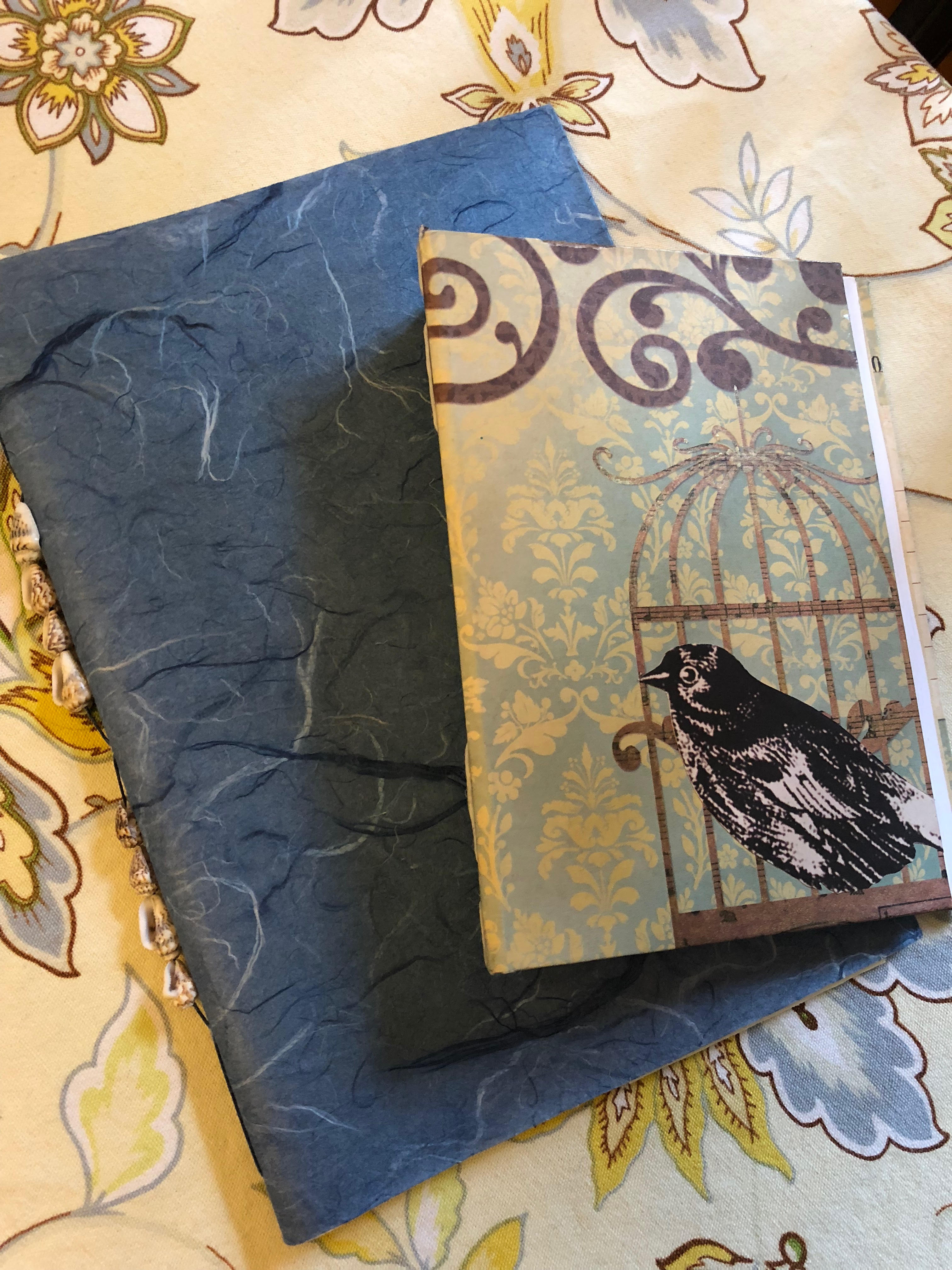
2. The Art Fair at my community college. It’s a fundraiser for the Fine Art’s Department Art Club and it was amazing. What does this have to do with poetry? Look at the journals I bought!
3. Meeting with The Blank Page. This is our student creative writing group on campus that I started when I was still an adjunct. It’s a small group but mighty and I always leave our meetings feeling energized even if sometimes we talk more than we write.
4. An acceptance of two poems. I’ve been in the drafting and revising stages with a lot of my work for the last year and half or so (I know because the last acceptance I had included a poem I wrote when my son was about four months old and he’s going to be three in May), so I’m so thrilled to have two brand new poems out in the world. I’ll post here when they go live.
5. Out of Wonder. I read my son poems from this book on a regular basis and it makes me happy every time.
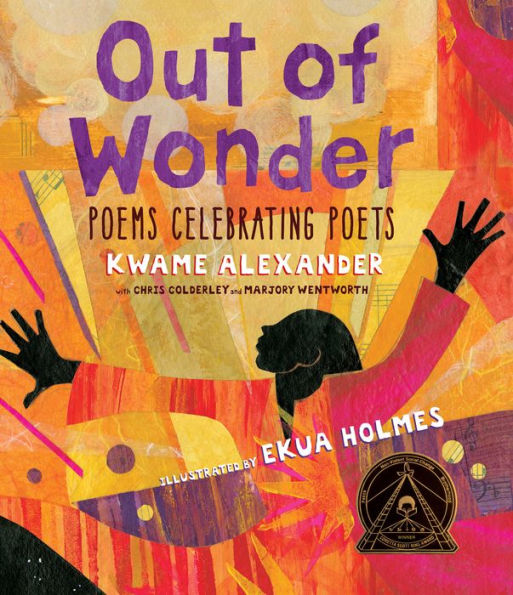
6. Writing with my students. This week in my creative writing class we wrote poems using the haibun form (Thanks Two Sylvia’s for introducing me to this form!) In my poetry class we talked sestinas and they’re working on groups on their own. It’s fun to draft with them and keeps me writing during the semester.
Don’t forget that in celebration of National Poetry Month I’m sharing a poem a day on Facebook, Instagram & Twitter. Let’s read some poems together!
For National Poetry Month this year I’ve organized three events on the campus of my community college. These include a visual poem workshop, a poetry workshop & we’re closing out the month with Poem in Your Pocket Day on April 26th.
I’m also writing & revising & submitting. I’m not doing a structured 30 for 30 this April but I did subscribe to Megan Falley’s lovely website. Check it out here and sign up for the excellent prompts Megan supplied for National Poetry Month. My students and I wrote over #3 this morning with some really interesting results.
I’m also sharing poems via Facebook, Instagram & Twitter, so follow me for a poem a day!
Happy National Poetry Month, lovelies!


This summer two wrens built a nest in a bright orange begonia that I hung out on my front porch. I spend a lot of time out on my porch during the summer months, especially in the morning. I like to go out first thing, with my cup of coffee and my laptop and write or grade or watch my neighborhood wake up.
I have a great fondness for birds. Anyone who knows me, knows this love to be deep and true. I write about birds. I collect feathers. I own clothing printed with birds/feathers. I grew up with my grandmother and grandfather pulling me towards windows or sliding glass doors, whispering blue jay, cardinal, sparrow & chickadee. Winters my mother trudged through deep drifts of lake effect snow and filled her feeders with black oil sunflower seeds. She’d come inside, cheeks red from cold and exertion, and immediately curse the fox squirrels who hung precariously from her window feeds, gorging themselves on seeds that speckled the snow below.
This week, as always, The Academy of American Poets shared a bunch of wonderful poems as part of their poem-a-day project. Among this recent batch, “Fledgling” by Traci Brimhall:
…You take down the hanging basketand show it to our son—a nest, secret as a heart,throbbing between flowers. Look, but don’t touch,you instruct our son who has already begunto reach for the black globes of a new bird’s eyes,wanting to touch the world.
Read the rest of “Fledgling” here.
This reminded me of my own poem, also titled “Fledgling,” that I wrote the summer my son was born. I drafted the poem while sitting on my couch in my living room, staring out the large window that looks out onto my front porch. I spent much of the first weeks of my son’s life sitting on the couch, holding this tiny baby (who came three weeks early), wrapped in a fuzzy blanket against the chill of the air conditioning. I knew it was white hot summer outside my window, but I couldn’t feel the warmth. One day, while the baby dozed, I caught a tumble of brown feathers our of the corner of my eye: a baby wren. I watched him teeter on the ledge of my porch, eating worms his mother swooped into his gaping throat. He sat on that ledge for quite awhile before he finally gathered the courage to follow his mother, half falling, half flying out of sight. I sat staring for a few minutes after he’d gone and then I shifted my sleeping baby, picked up a pen and my journal and started to write.

That poem is the only poem I wrote that first summer as a mother. It came quickly and underwent minimal revision before I sent if off into the world. I remember when I got the acceptance from New Madrid I was so happy because, for me, it proved that yes, I could do this. I could keep my poetry and be a mother. Intellectually, I’d known this to be possible, but when you’re in the weeds of no sleep and bottles and crying and diapers and formula, it’s hard to be rational. It’s hard not to be one raw, gaping wound.
It hardly seems possible that it was two years ago (my son turned two this past May) that I sat on my couch, exhausted and freezing, watching a fledgling waiting for his mother to show him how to fly.
Typically when people go to a flea market, especially one of the biggest flea markets in the city, they pick up vintage dresses or comic books or a jar full of glass marbles all colors of the rainbow.

What did I buy? A cow skull. To be honest, I was between cow and coyote, but ultimately, the cow seemed more impressive.
I have a thing for bones. I don’t know where it comes from, but I’m a bit of a scavenger of the natural world anyway. I have several, what my husband calls, curiosity jars that are full of seed pods and birds nests and stones of all shapes and sizes.

I feel like I spend a lot of time “collecting,” whether it be physical items or just cataloging images, ideas, thoughts in my head. This is often how a poem starts for me, from one of “my collections” I pull something out and start to draft. I don’t really feel like there is any consistency to these collections while I’m cataloging items, but when go back and look at the drafts I’ve generated I realize that there are definitely common themes or images. Sometimes an item in my collection will sit in my brain or journal for a really, really long time before I do anything with it, but eventually it makes it way out onto the page.

The last few months I’ve only drafted, sometimes badly, and not revised much. I wrote poems in April for National Poetry Month. I wrote poems in May and March and February. All drafts are rough, but they exist and now it’s time to figure out if they’re ever going to move beyond being an item in a collection. It turns out this past fall/spring semester I was thinking a lot about children, which isn’t surprising given as I have a two year old of my own. These drafts contain items from many other collections as well: lines from Elizabeth Bishop poems, red sweaters, blueberries, salt water, olive trees, sparrow, lines from Sappho, and on and on and on. I don’t know where a lot of these drafts are going or truthfully, if they’re going anywhere, but I suppose failed drafts are just another collection, right?
 Brianna Pike