BLOG POSTS

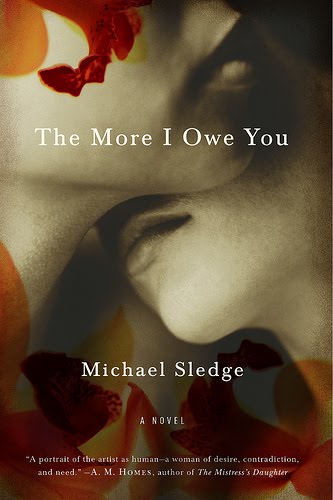
The More I Owe You

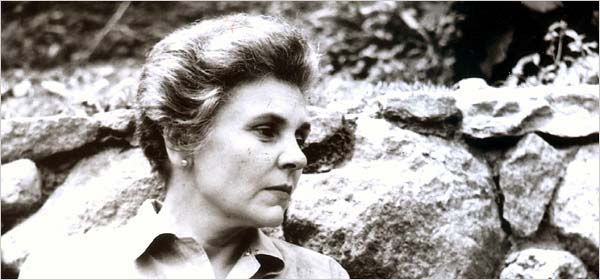
Among the many tasks I’ve set for myself in this new year to help me reclaim my writing life (I certainly lost track of it in 2010, especially the second half) is to read more. So far, I’ve done a pretty good job. I’m up to date on my New Yorkers, I’m almost caught up to the January issue of Poetry and I’ve read three books since Christmas. The third book I just finished not three minutes ago and I think it’s worth a few words. The book in question is called The More I Owe You by Michael Sledge and I believe I heard about it on NPR several months ago. The book is a fictional account (rooted in real life events) of the life of Elizabeth Bishop and her lover Lota de Macedo Soares.

Elizabeth Bishop was the first poet that I really heard and she is a large part of the reason that I started to write and that I still write. Whenever I feel like my poets have lost the ability to see, I go back to Bishop. I love her and I will greedily consume her in any way that I can.

Reading this novel brought out the poetry nerd in me first. I loved how Sledge started weaving Bishop’s work into her travel narrative almost immediately. For a reader that is intimate with her poetry, it is like a poetic treasure hunt to go through this book and pick up on the allusions and references that eventually became some of Bishop’s most famous poems. At points the prose is achingly beautiful and exact, just like Bishop’s own verse. I was expecting this precision in language, because honestly, I don’t know how you write a book about Elizabeth Bishop without laboring painfully over each word.

What I was not expecting was the exquisite sadness that I encountered in the pages. While I admired and obsessed over Bishop’s poems, I also read her personal letters and interviews. I knew she struggled with family trauma and alcoholism. I knew she wasn’t perfect. I didn’t want her to be. I didn’t need her to be. However, this book puts a spotlight on her loneliness and then amplifies that loneliness by pairing her with a woman, Lota, who is even more lonely and even more desperate for validation then she is.
This is not to undermine their relationship. There is much joy and beauty in this novel as well, but it is always boiling with tension just below the surface. When I read the final scene when Lota overdoses, I felt my heart tighten. These women struggled and clawed and fought to find each other in the world, only to lose sight of what was most important at the very end.

This book also offers glimpses of other relationships that serve as foils for Lota and Elizabeth. The most famous seems to be Robert Lowell who makes one disastrous appearance after another until he leaves Elizabeth once again alone on a street corner in Rio.

It is a love story and a beautiful one at that. There are missteps and betrayal and rage on the part of both women, but they are also brilliant and vibrant and creative. This book makes me long to know them and go walking with them along the beach in Brazil or sit in Lota’s beautiful Samambaia and drink coffee. This will never happen of course, but in his pages, Sledge is able to give a very personal, very beautiful portrayal of a woman who some accused of being closed off or removed. This novel proves that she was anything but.
Recognizing the Danger Signs

The beginning of the semester arrived on Monday for the community college where I am a full time assistant professor. I teach composition and creative writing and recently have taken on American Lit. I only have two face to face courses this semester, the other two being online (that’s a whole other post altogether) however it’s always nice to walk into a room of fresh faces at the beginning of the term.

This morning, while I was drinking my one designated cup of coffee for the day, I came across this article in The New York Times: College’s Policy on Troubled Students Is Under Scrutiny. Unless you’ve been living under a rock for the past few weeks, you’re aware of Jared Loughner opening fire in Arizona. Among his victims Representative Gabrielle Giffords. However, what I’ve found particularly compelling about this story is the narrative surrounding his attendance at Pima Community College.

I know I think this an important part of the overall picture because a). I’m a professor at a community college. 2). I had my own experience with a troubled student last spring. My student was young, erratic, and physical. He was bi-polar and ex-military. His behavior became increasingly unpredictable as the semester progressed to the point where he made his fellow peers uncomfortable. What finally drove it home for me, was when he showed up one day in my office looking for me while I was off campus for a meeting. He proceeded to talk to my officemate for several minutes, becoming more and more animated and making no sense whatsovever. When I returned from my meeting, he was long gone but my officemate and several other faculty told me I needed to file complaint. His behavior made them fear for my well being. This is the part of the story that I relate to the article from the Times. When I filed my complaint, I learned that this student had had a previous altercation in Financial Aid and that other students had complained about him. However, no one ever followed up on my complaint with me or my chair or the dean. Furthermore, my student vanished until the last week of classes when I received a letter letting me know he had been hospitalized and would not be back.

In the wake of the events in Arizona and even the incident at Virginia Tech, it is obvious that our community colleges need more support when it comes to students suffering from mental illness. I’m not saying that more resources or available care would have changed the outcomes for Loughner or Seung-Hui Cho (Virginia Tech) but I think the fact that authorities know something was wrong but didn’t know what to do about it is indicative of a larger problem. The only course of action seems to be to remove them immediately from the school, but in Loughner’s case there is speculation that this action may have served to aggravate him further.

What’s the answer? I think more education and more attention paid to students themselves. It was obvious to me that my student’s situation was not a priority and that just isn’t acceptable. We need a counseling center, with trained medical professionals. We need seminars for students and faculty. We need to stop waiting until something happens to take action.

Memory & Experience

Generic Disclaimer: to say that I was a complete failure this past fall in terms of reading, writing and working on my own projects would be a huge understatement. I’m only mentioning this to explain why it is just today that I read the December 2010 issue of Poetry.

This particular issue of Poetry was dubbed “Q & A,” so you had poets writing poems and then answering questions about those poems. Some of my favorite work in this issue included poems or quotes from Michael Robbins, Paula Bohince, Tom Pickard, Charles Baxter, and Jane Hirshfeld.
It was what Jane Hirshfield said in her two Q & A sessions that gave me the most food for thought. She made this comment after her poem “Sentencing:”
“We’ve all had the experience of lifting some fantastic stone out of a streambed or off a wet beach, and then finding it later, dry on the shelf, quite plain and dull. ‘Why is this here?’ you wonder, when it catches your eye at all. Some experiences are like that. Their full inhabitance requires the moment in which it lived.” (215)
She made these two comments regarding her poem “Sonoma Fire:”
“Real beauty, for me, is never a distraction. If it were, the its not beauty-it’s prettiness or decor.” (217)
“…if we find fire, or tragedy, beautiful, it is because we ourselves have been, fore the moment, spared.” (218).
I like the first quote because I write a lot of poetry from my experience or from the experiences of those close to me. However, I’m constantly grappling with the question of whether or not I can adequately convey that experience. Can I do it justice? Do I have the right to write about experiences that are not mine? I may think of a memory or moment in time that would make a terrific poem, at least in my mind, but then when I try to commit it to paper it jut doesn’t work. It turns into that dull stone.
As far as Beauty (with a capital “B”) goes, I also struggle with that definition and what it means to my work now as opposed to what it meant 5 years ago. When I was working on my manuscripts for both my MA and MFA, I feel like I had a somewhat warped sense of the world. I don’t mean to say that what I observed wasn’t valid but I think it was too limited. Actually, I don’t think, I know. The poems I’ve written over the past two years or so are broader in their subject matter and as a poet (still feel off saying that) I’m less afraid to tackle topics or ideas that are not “beautiful.” I’m trying to write a poem right now that kind of addresses that transition from on phase of writing to another. It’s tentatively called “Out of the Woods” because I feel like for awhile my poetry has literally been stuck in the natural world, and while I will always go back to that subject matter because it is beautiful and, I believe, there are still important things to say about it, I also know it’s time to move on.

The Kindle, Sexism, and Dracula

I got a Kindle for Christmas. My dad purchased them for all of us (mom, sis & fiance). Opening it was a mixed bag of emotions at first. My reactions ranged from “Cool! A new literary toy!” to “Oh shit! I’m contributing to the downfall of print literature.” I’m aware this is ridiculous.

The long and short of it is: the Kindle is cool. I like that you can loan books. I like that books are cheaper to download on the Kindle. I like that when I think or hear of a book I want to read, I can add it to my wish list and then download it. I like that I can make notes and annotations on the Kindle. Will I ever stop buying paper books? Does the sun shine in the sky? Please.

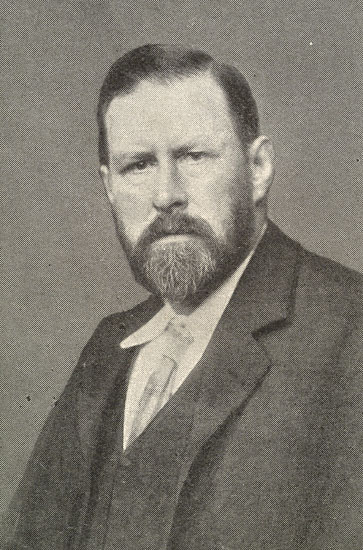
One of the aspects of the Kindle I like the most is you can download classics for free, so over Christmas I read Dracula. It was enjoyable; however, I was struck by the contradictory roles of women in the book. The two main female characters Mina and Lucy, are annoyingly traditional and yet interestingly progressive at the same time. For instance, before Lucy has the misfortune of becoming a vampire, she enjoys the attentions of three separate suitors who desire her hand in marriage. She talks about each of them, in detail, in a letter to Mina. Her view of them and how she handles their proposals reminds me a little bit of Sex & The City. She’s an attractive, intelligent capable woman who can have the pick of the litter. However, at the same time the way the men treat her in the book is very stereotypical. It is obvious Lucy is tough. She braves the transformation of becoming a vampire, she puts up with her dying mother and she manages to deal with strange incidents of sleepwalking and waking nightmares. However, the men in the book treat her like some sort of wilting flower. I mean, she’ the waking dead for crying out loud.


This is even more apparent in Mina’s character. After all of the men in the book come together for the common purpose of hunting down and destroying Dracula, they realize they need to organize all of their written accounts. Who volunteers to do this? Mina. She’s brilliant and as far as I can tell, a lot more organized than any of the men. However, even before she falls victim to Dracula herself, there is a constant (almost irritatingly constant) discussion about whether she should be spared the details of their quest for this fanged phantom. This is the only part of this book that I find ridiculous because it seems to me that if Mina has the strength to deal with her husband, Jonathan’s, terrible ordeal, the loss of her best friend Lucy, and the ravings of Renfield, she can probably hear about travel plans.

Despite all of this, I do enjoy this book. I like the way Stoker used diary entries and incorporated different viewpoints into the story. I also love reading a book about vampires that does not mention the names Bella, Jacob or Edward. Me? I’m on team Bram.

New Year, New Space

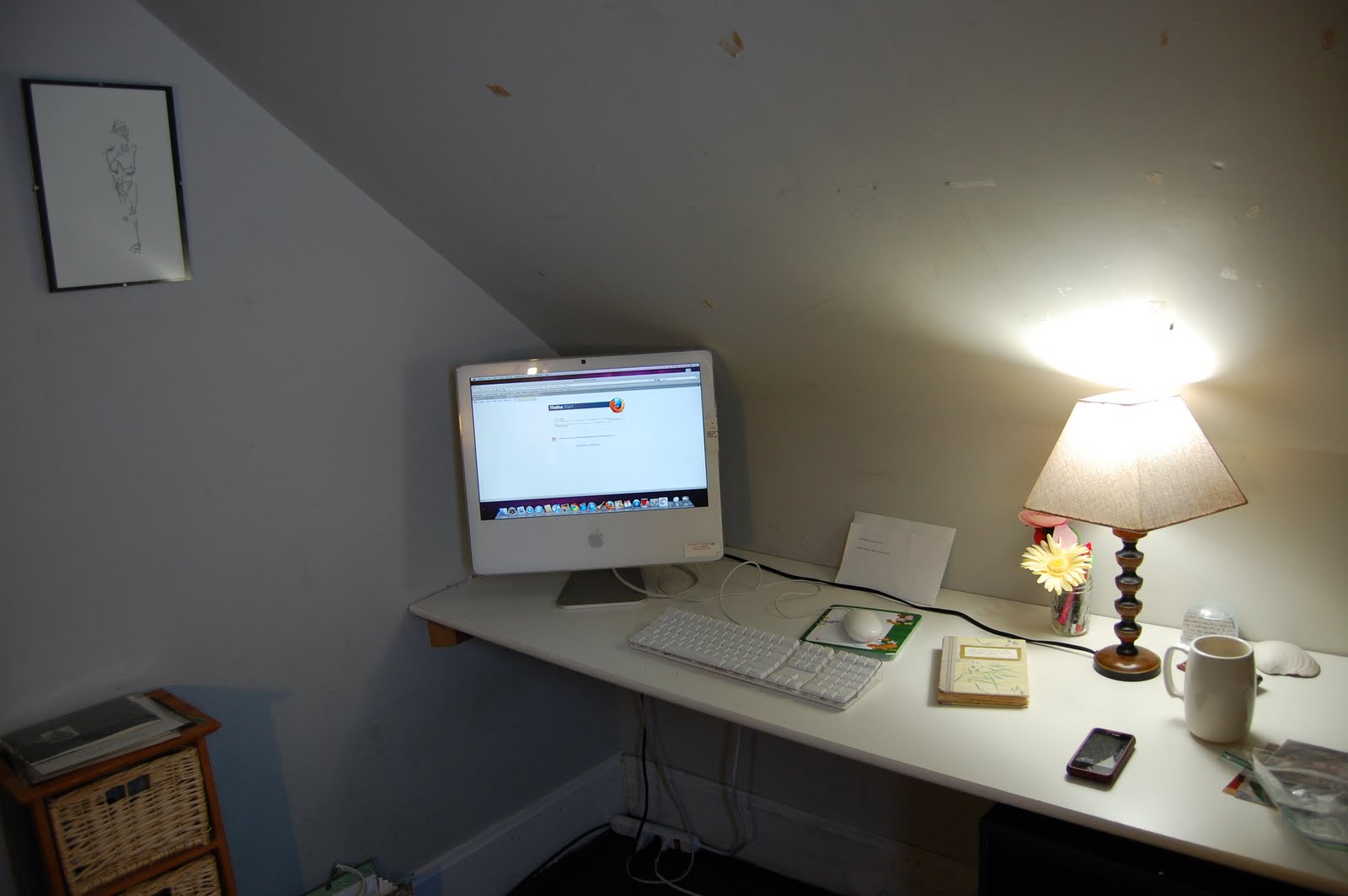
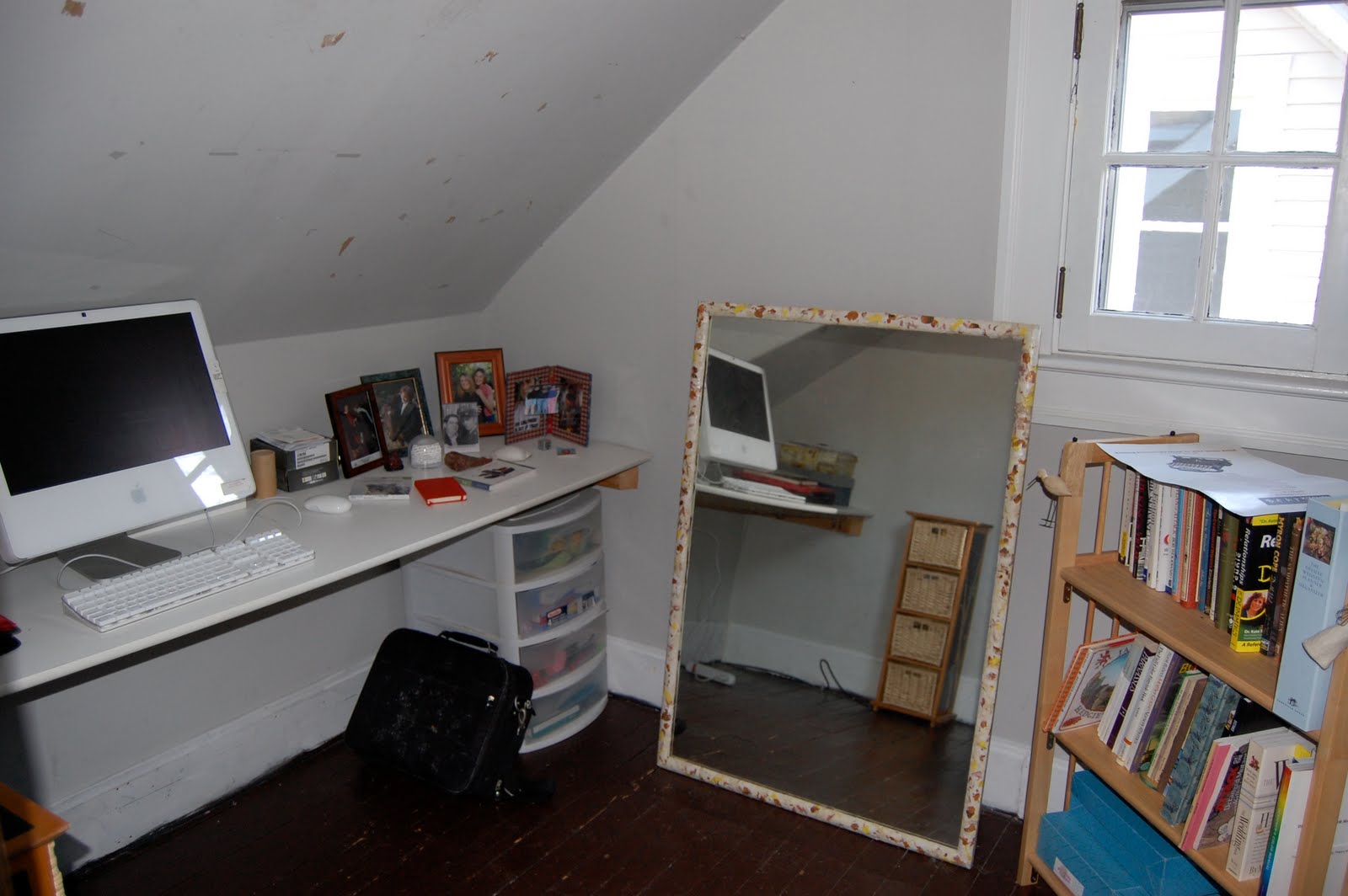
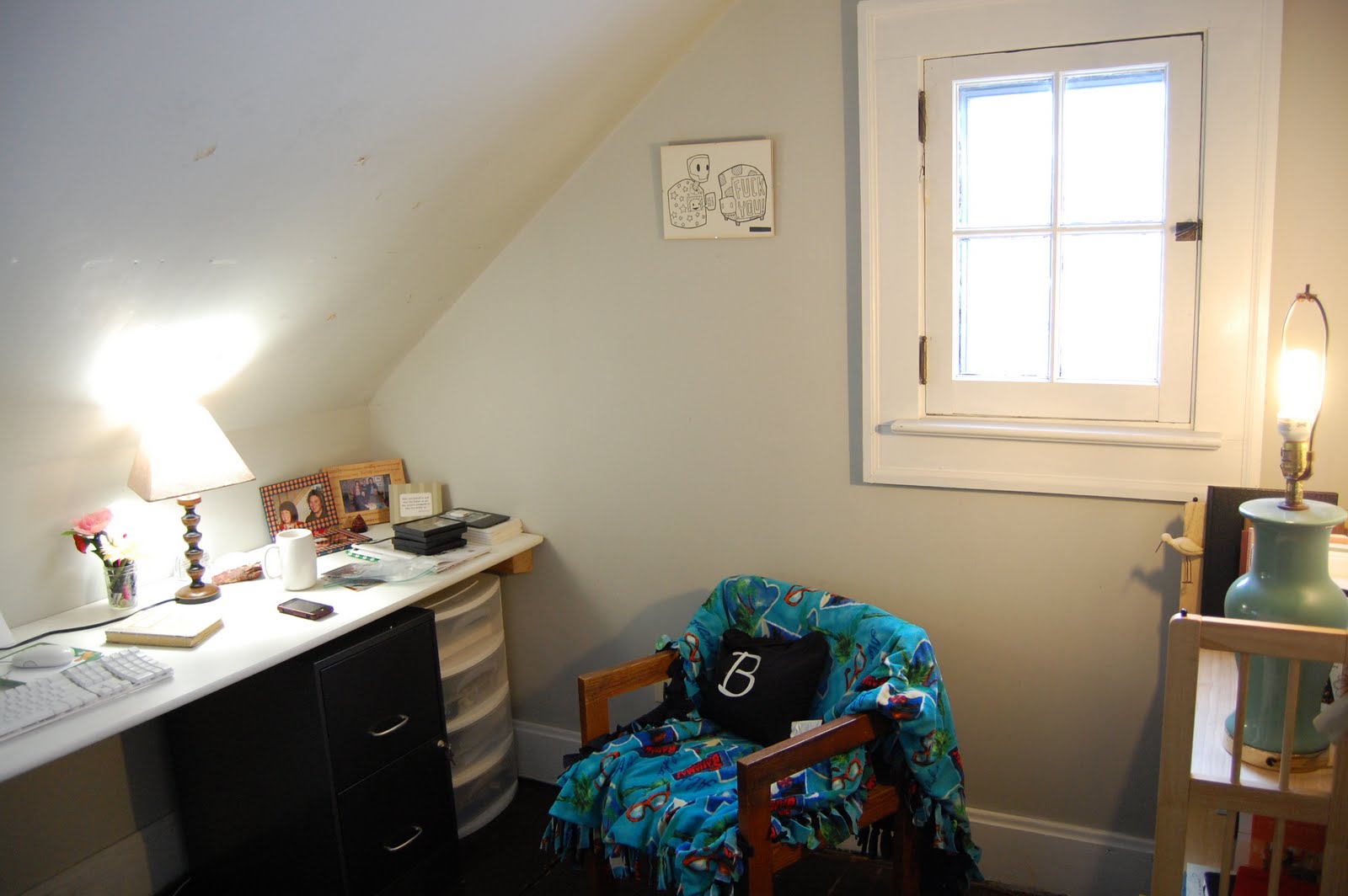
Finally, a place to work…


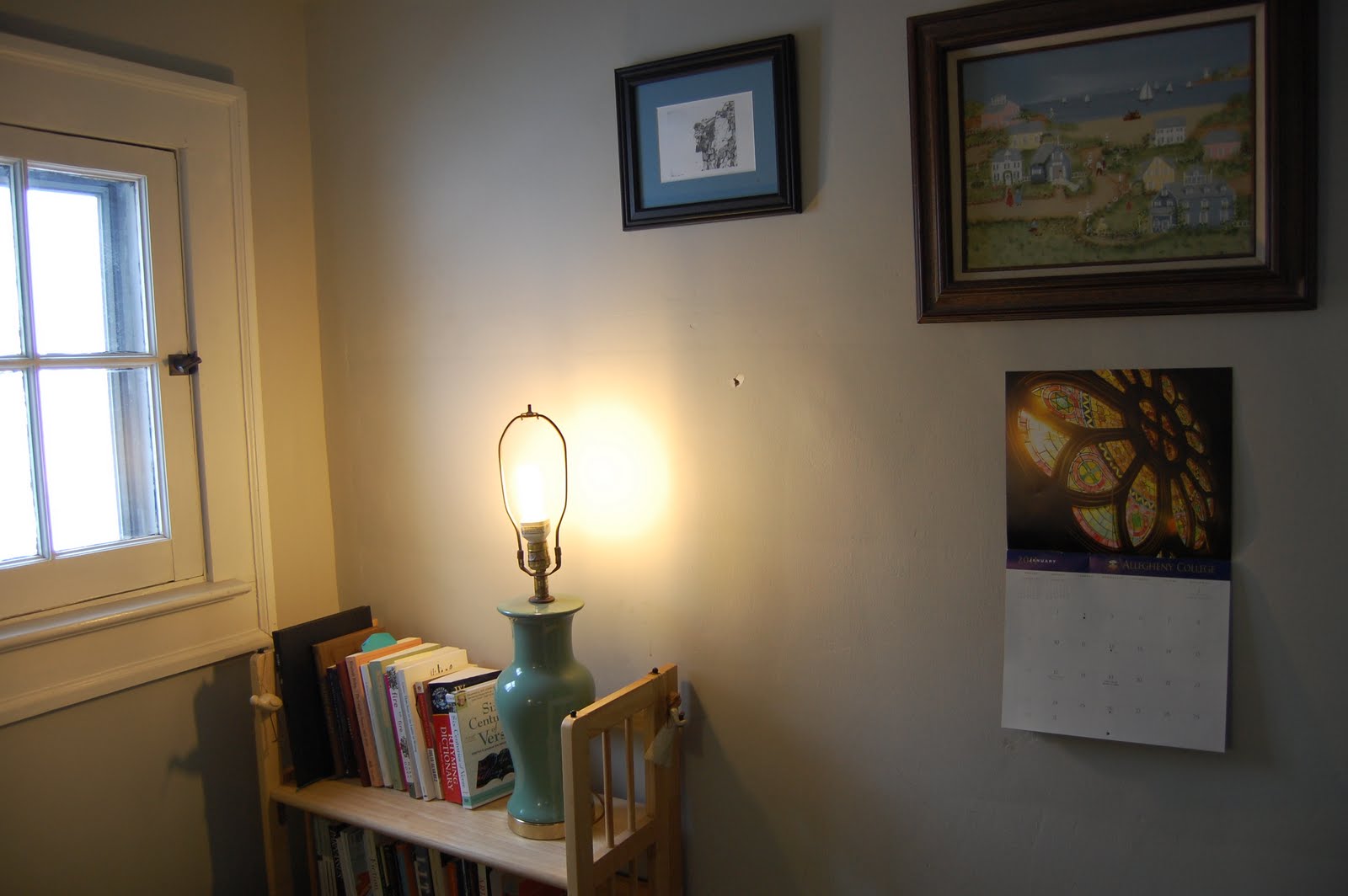
You may be able to tell by the slant of the walls and the overall odd shape of the space, that this not your typical “office.” Yes. It is a closet. Our guest room closet to be exact, which is way too big to be a closet, so it has become my office.

I’ve written two poems up here so far and this is my first blog post, so let’s hope the productivity continues.

Zombies, rings, 4th of July, and fireworks in a fir tree…

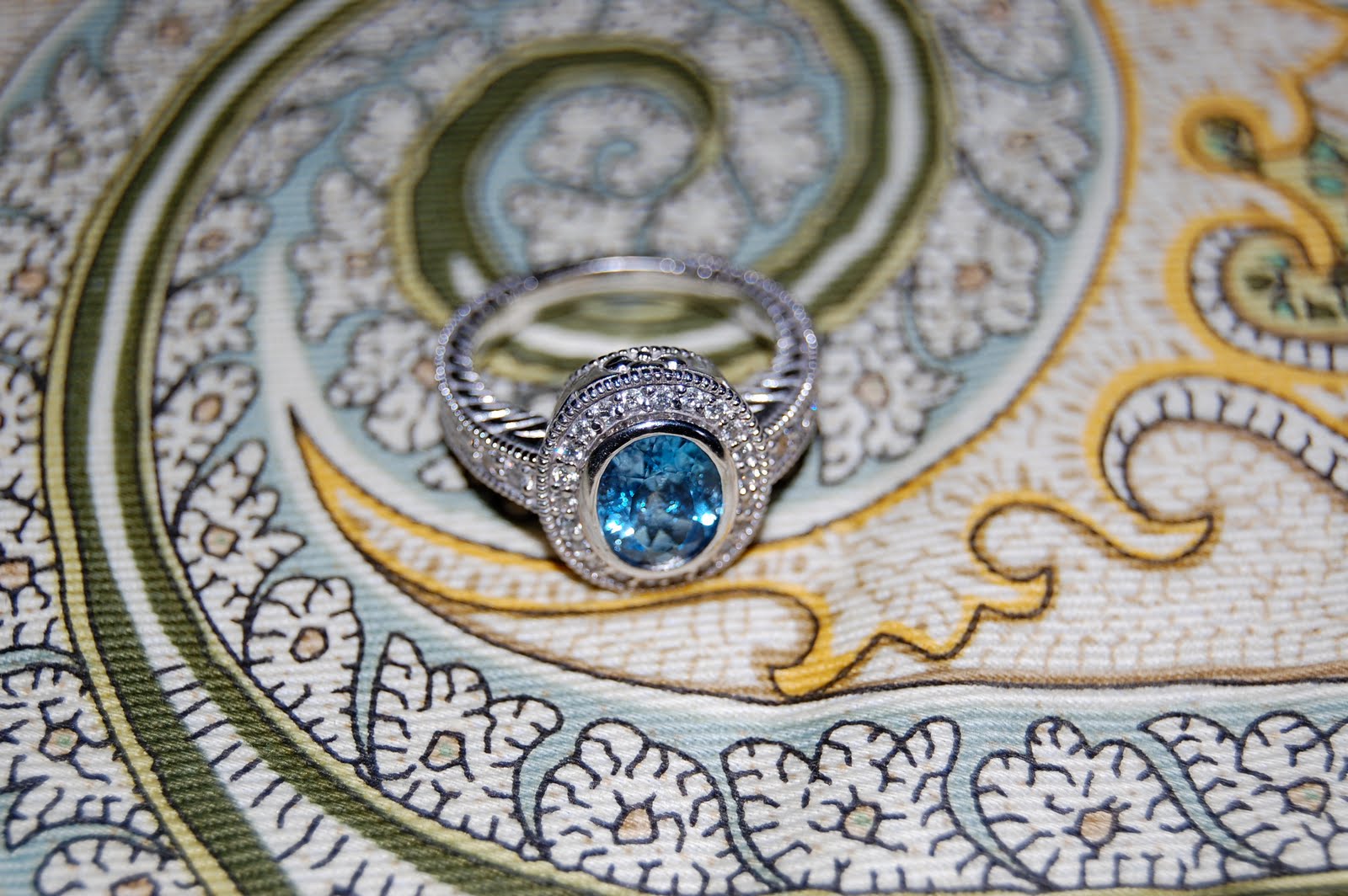
On Friday July 2, 2010 I pulled this ring (see below)…


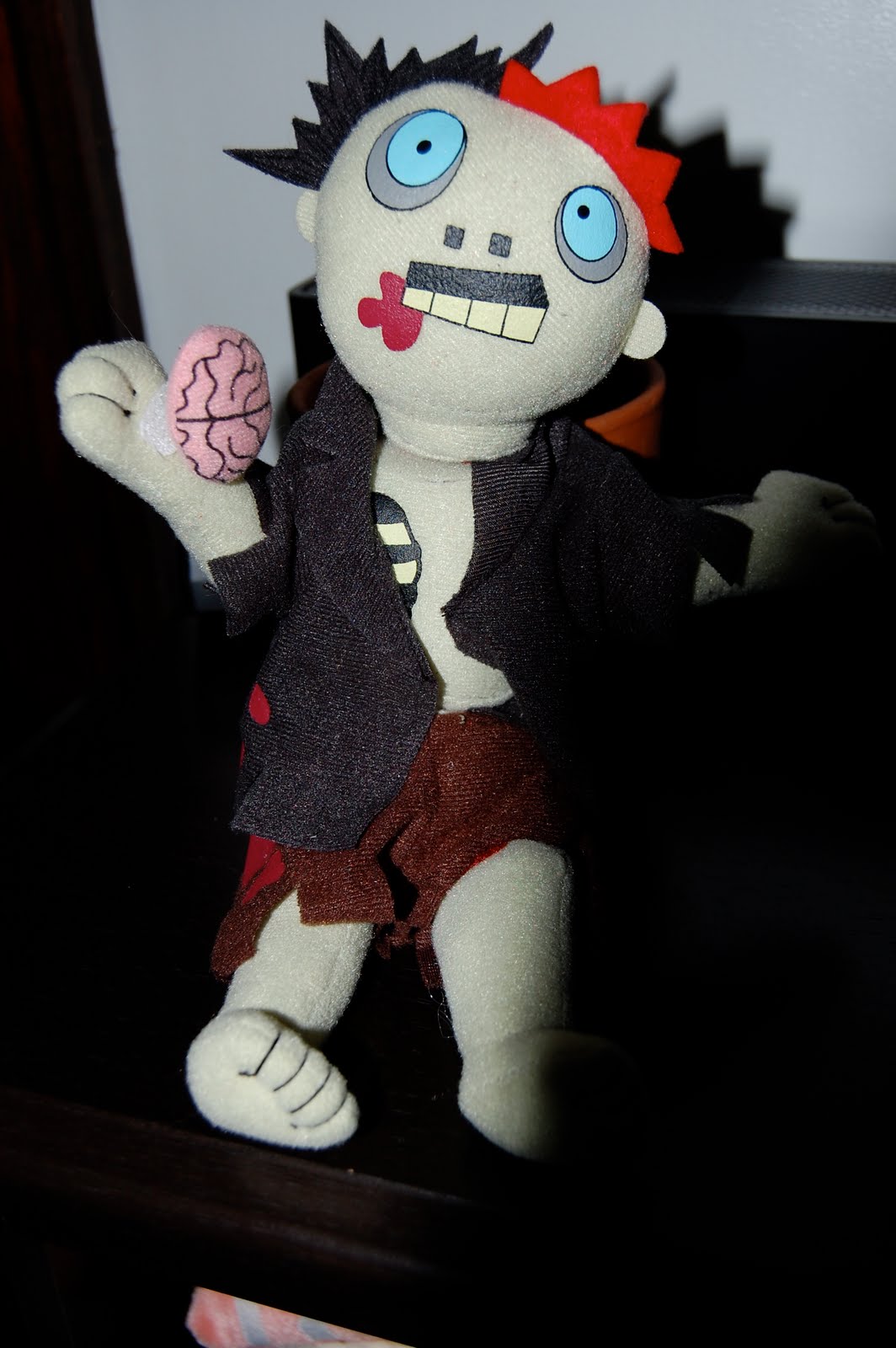
out of this zombie…
RJ and I are engaged. I am very happy. I think the zombie is too.
___________________________________________________________________

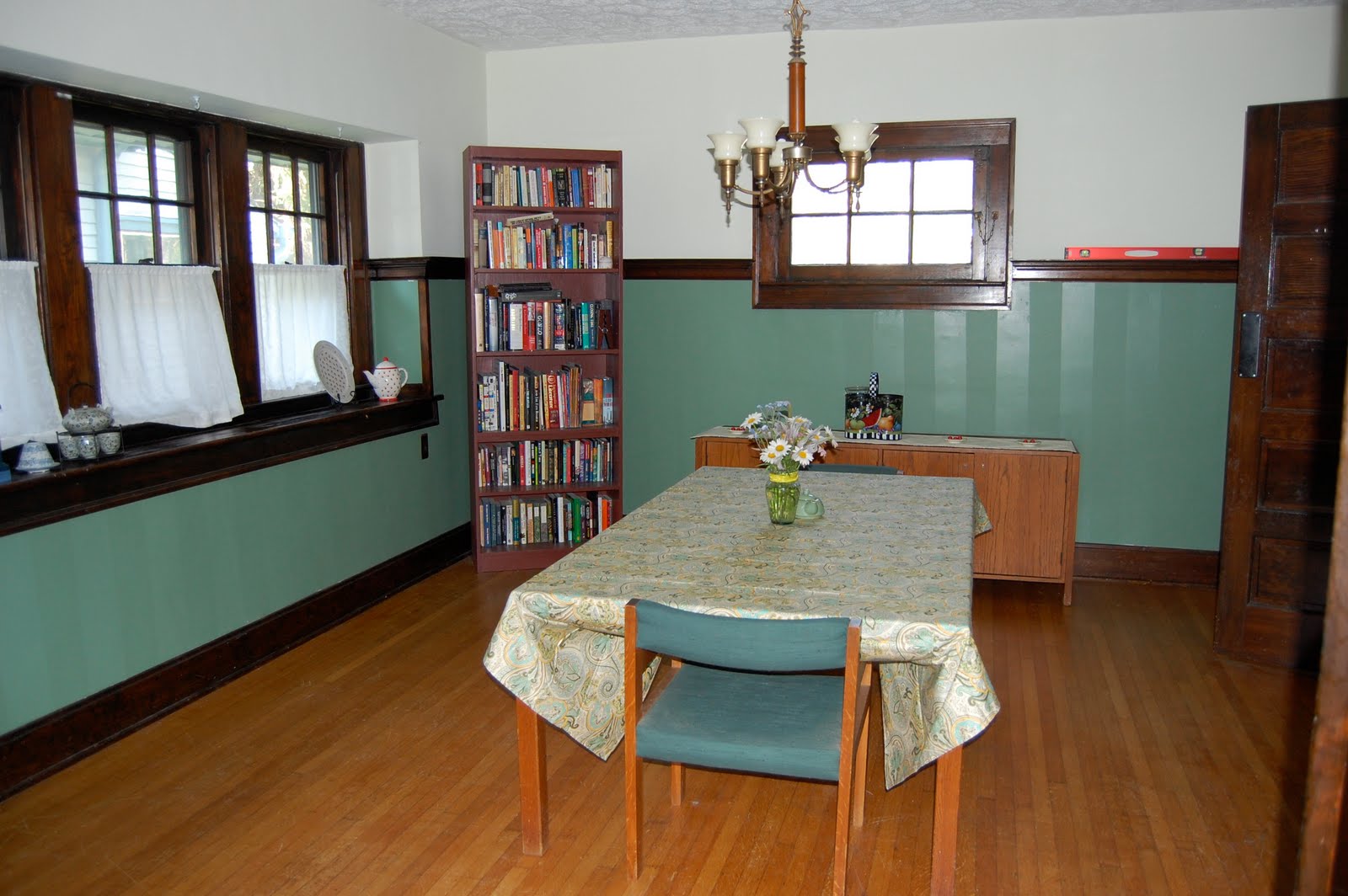
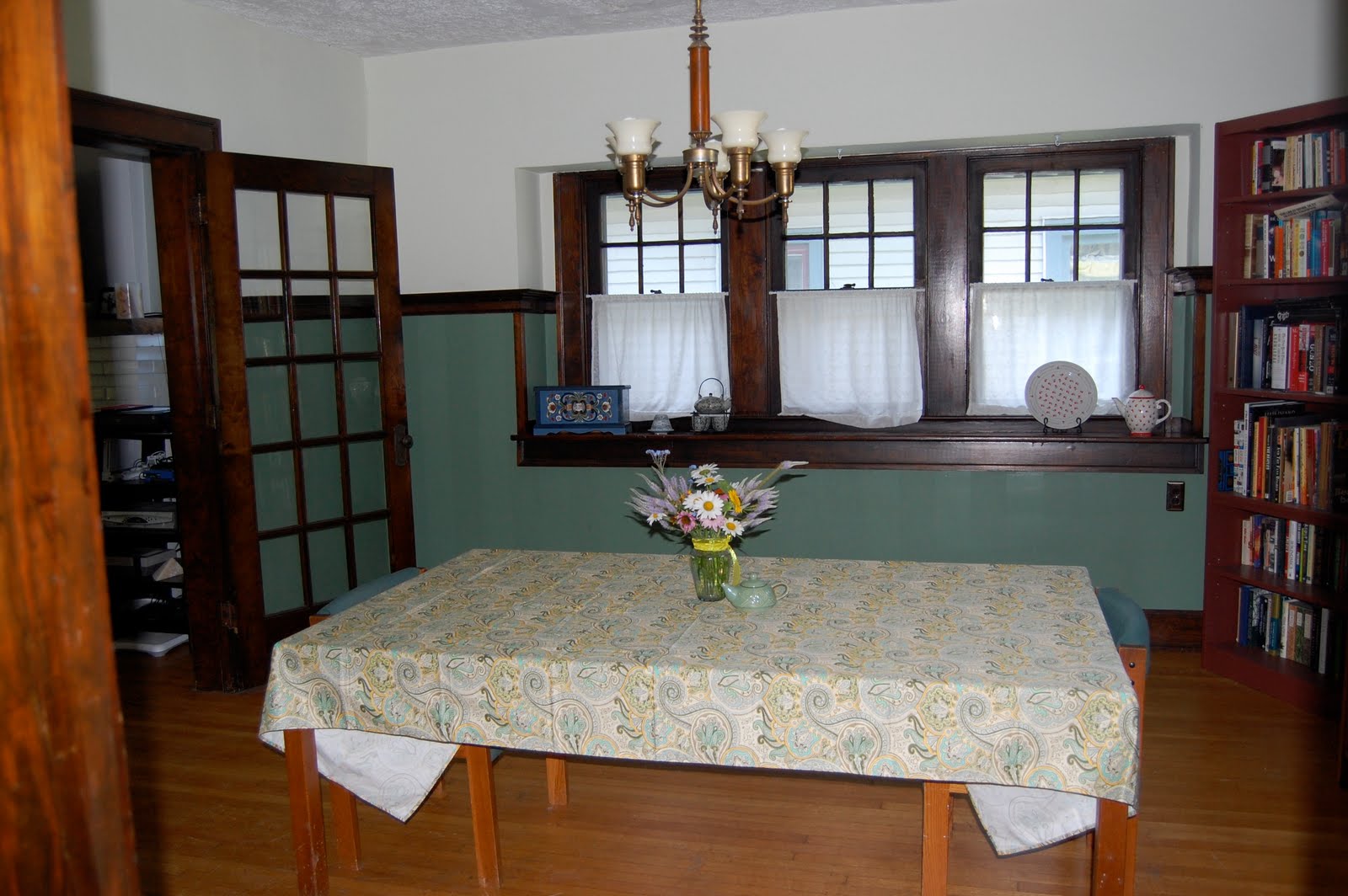
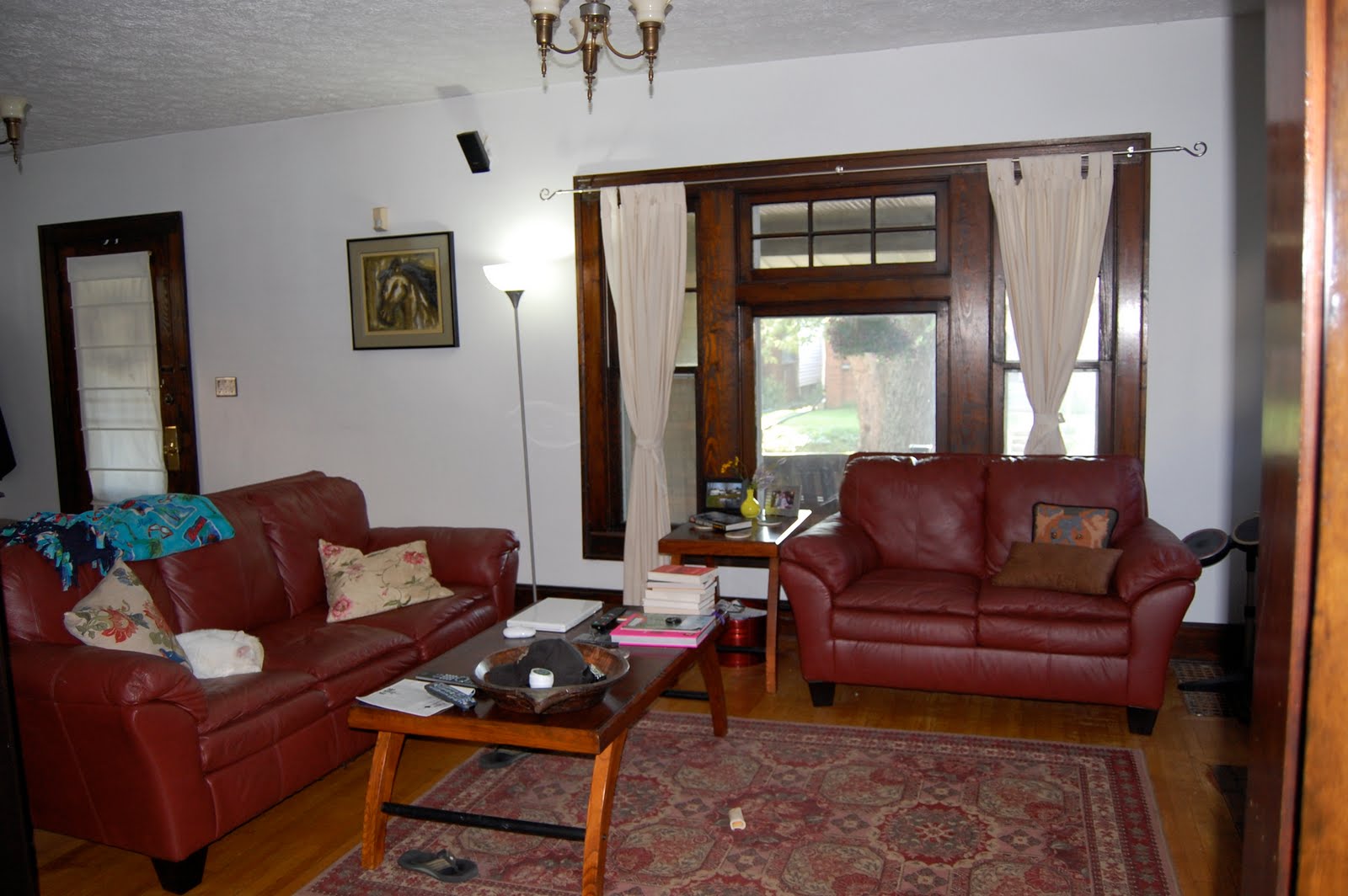
My parents visited this weekend and like all good parents, they did not arrive empty handed. They gifted us their original dining room set, which means now every room in our house has the appropriate furniture in it. To celebrate, see pictures below of our house with actual furniture. Hooray!

___________________________________________________________________

My garden is blooming in full force.

Addiction Memoirs and Self Loathing

I don’t know what is about addiction memoirs that I am drawn to. But I just finished Dry by Augusten Burroughs this morning, and it occurred to me that I’ve read quite a few of these types of memoirs over the past several years. Of course I’m drawn to memoir in general. My first non-fiction class pretty much solidified that on day one, but there is something about the brutal honesty of these stories of addiction that really appeal to me. I’m sure some people think it has to do with “redemption” stories, but I don’t find addiction memoirs redemptive. I find them realistic. There is no guarantee that these people will continue therapy or stay on the wagon. As I mentioned in my previous post about Mary Karr’s Lit, what I liked most about the book was that she’s a work in progress. This is also how Dry ends. And whether you’re and addict or not, well we’re all works in progress.

I did not read Running With Scissors, I listened to it on CD while driving back and forth to Kentucky while I was getting my MFA. And while this may sound stupid, I didn’t realize how disturbing that book was until I read Dry. As I was telling R last night, because of the way Burroughs writes, I don’t think the horror of his situation sank in till I revisited it in Dry. For example, he refers to his rape and relationship with a pedophile. And while I consciously remember all this from Running With Scissors, I felt it more when I read Dry. The book is funny and heartbreaking. I read it in three days and would highly recommend it.

Dry did call something to mind that I’ve mulled over and will probably continue to mull over forever. What’s the deal with self loathing and writers? Even as I ask this question, all these cliches come to mind. I remember all the questions I get from my students in intro to creative writing class: Why do all good writers commit suicide? Why are they all alcoholics/drug addicts?
Some of them find all of this sexy. They want to be the brooding, skinny, chain smoking cliche. However, whenever I think about the writers that I love that fell victim to their pain (Sylvia Plath, David Foster Wallace, Ernest Hemingway, Virgina Woolf, Anne Sexton and so on) I just feel sad. What could they given us if they had lived?

Baking, bouquets, and the beginning of term…

This week marked the beginning of the summer semester at school. I am teaching four courses this semester but only two of them meet face to face, the other two are online. This allows me to only have class twice a week, which is a welcome change from last summer when I was teaching six hours a day four days a week.

So far my students seem friendly and energetic. My classes have already shrunk from their original twenty two. There are always students who don’t show the first week, but for the most part everyone seems to be on target, so let’s hope it stays that way.

I am teaching a section of creative writing online this semester, so I’m sure I’ll be posting on that as the semester goes on. I’ve never taught the course online before, so it should be interesting.
_____________________________________________________________________

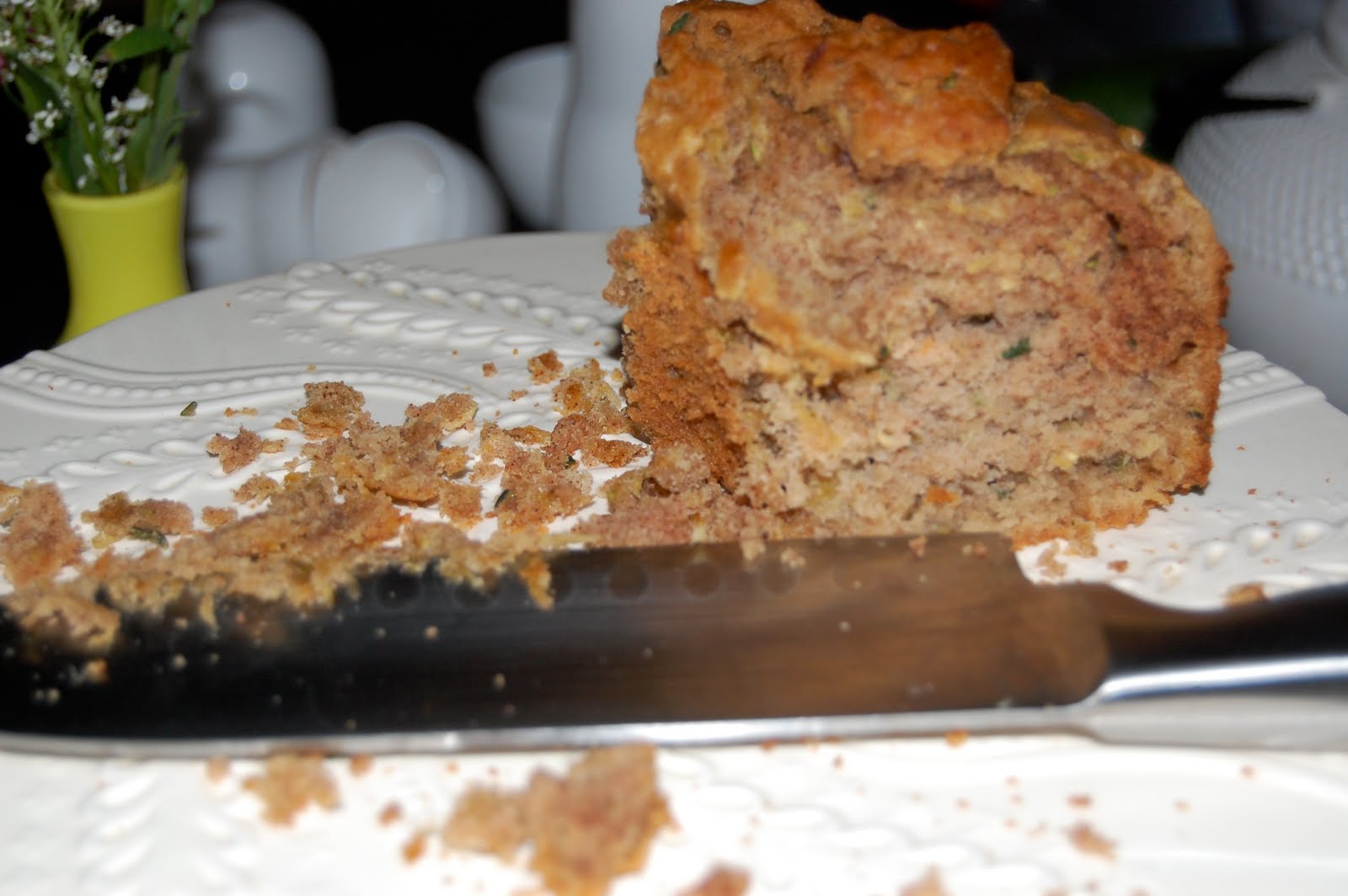
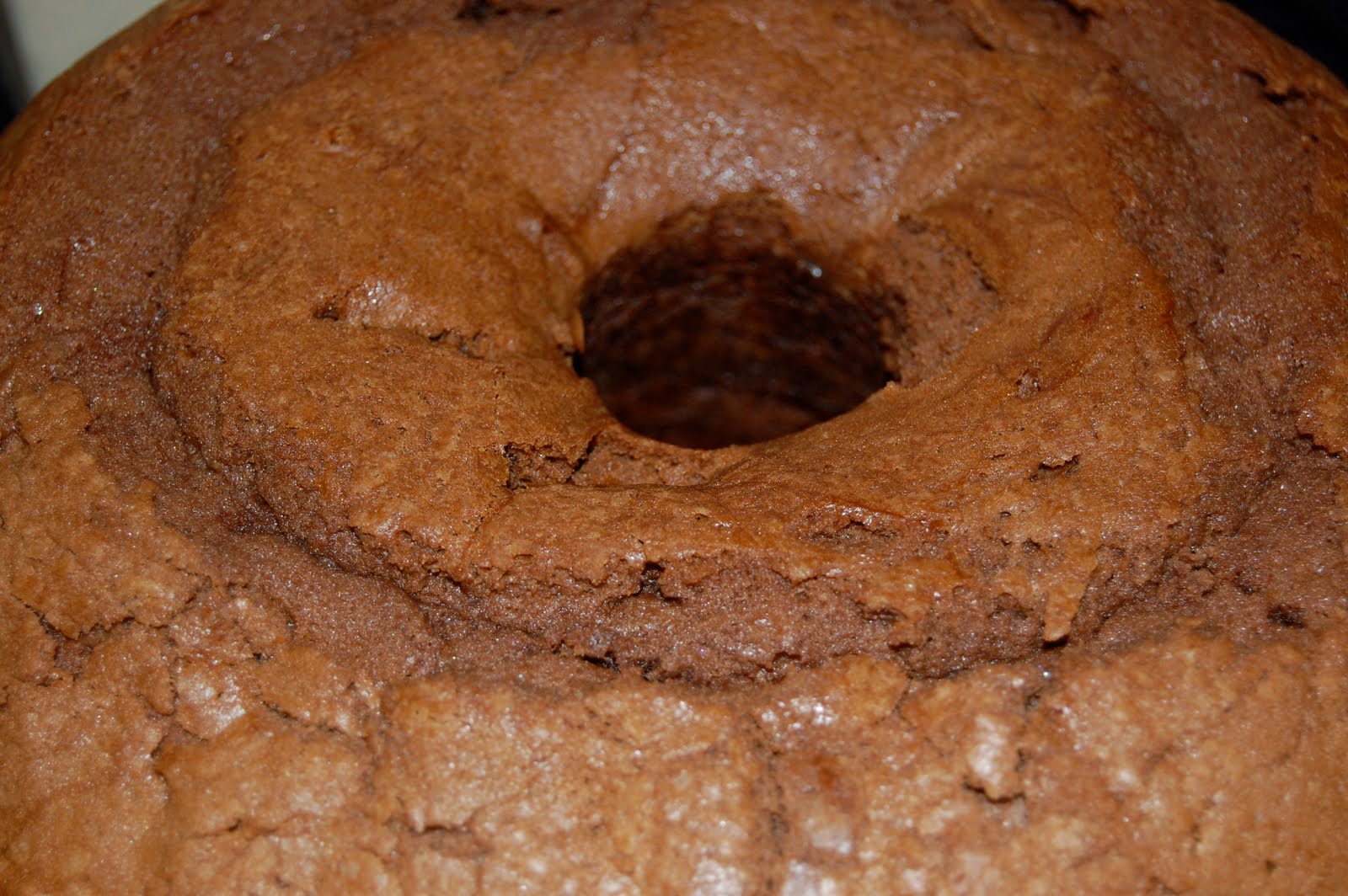
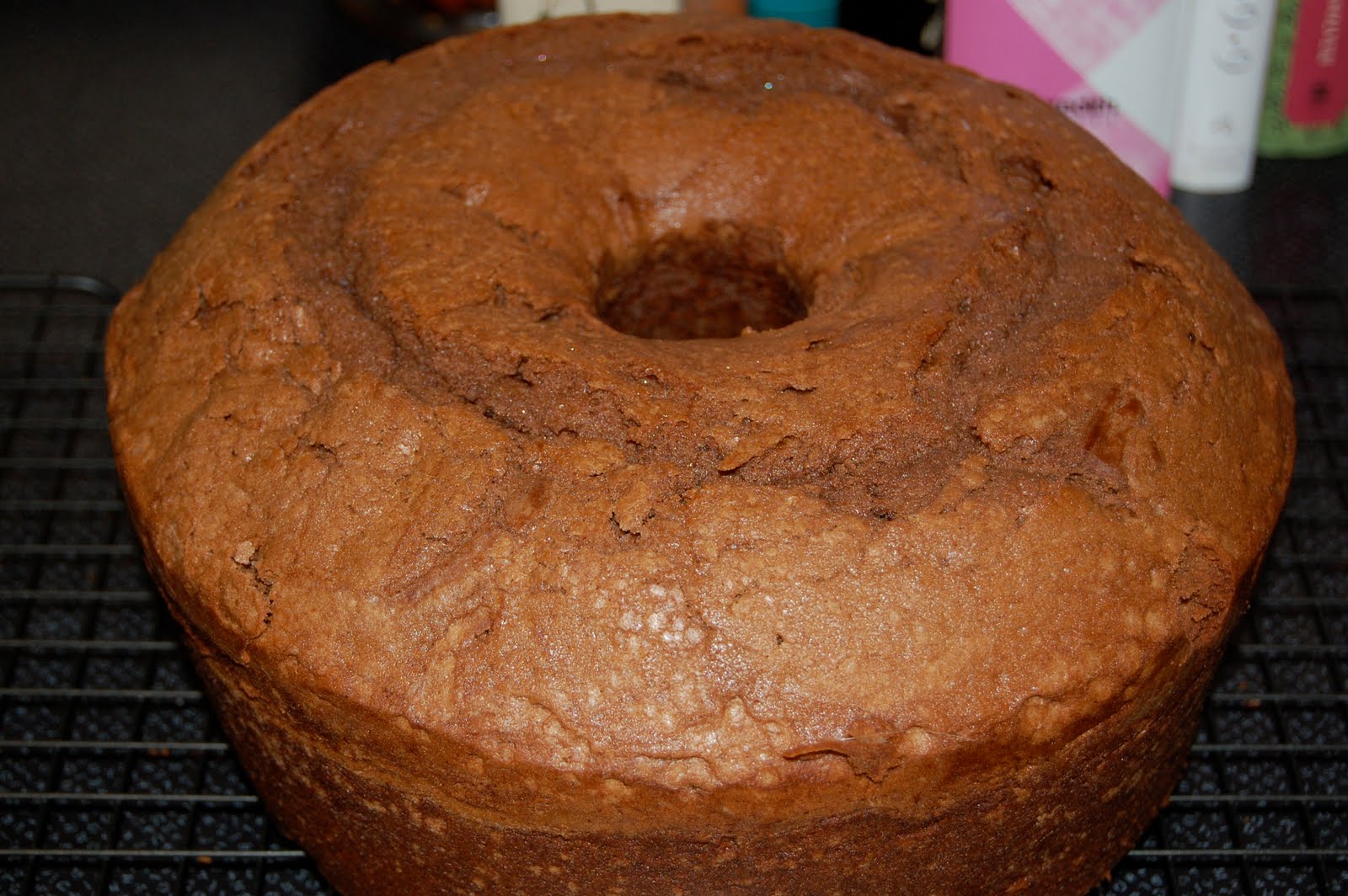
RJ and I pledged money to out local PBS/NPR affiliate this year. We watch PBS regularly and all I listen to in the car is NPR, so it’s a cause I don’t mind supporting. Our gift for our pledge was the cookbook All Cakes Considered, and I think it’s going to successfully make me a baking addict. I already love to cook and now that it’s summer and we’re getting our regular CSA box, I’m back to cooking with fresh produce, which is awesome. I’ve made two cakes so far out of this cookbook. Last night RJ casually dropped the hint “when are you going to make another cake?” The result was the chocolate pound cake shown below:

I’m going to slowly make my way through the cookbook, so I’m sure more pictures will soon follow.

I also made almond crusted talapia last week and made a fresh salad with our CSA bounty.

_____________________________________________________________________

The rejection letters from my last round of submissions are coming in, so it’s time to get going on the next round. I’ve put that on the agenda for next week. I always dedicate the first week back at school to school because there is usually little time for anything else. However, next week it’s back to the submissions and the regular writing.

I’ve also finished two books in the past couple of weeks, The Historian and Love in The Time of Cholera. I’ll post more about these books later, but I enjoyed both of them immensely and I hope to keep up my momentum with my reading throughout the summer.