BLOG POSTS

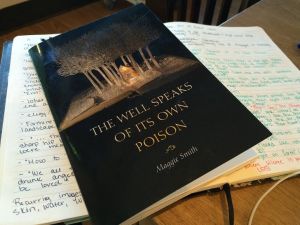
Poetry Summer Reading List Book #5: The Well Speaks of Its Own Poison

Book: The Well Speaks of Its Own Poison 
Poet: Maggie Smith
Publisher/Date: Tupelo Press, 2015
Why I bought the book: I read Maggie Smith’s poem “The Fortune Teller to the Woodsman” back in January. I don’t remember how I found my way to the poem, but I loved it immediately and started following her on Twitter. In following her I realized her second book, The Well Speaks of Its Own Poison, was coming out shortly  (including “The Fortune Teller to the Woodsman).  All of this  coincided with AWP,  so it was perfect timing to meet Maggie and buy her book. Have I mentioned I love the internet?

What I admire about this collection: I really admire the way that way The Well Speaks of Its Own Poison works as a collection of poems. I like the way Maggie uses apologues throughout the book to tie poems and ideas together. I wasn’t familiar with the term “apologue” before reading this book, so it was fascinating to learn about them while reading these beaunnamedutiful poems.

I also really respond to the content of this collection. I love folk tales and fairy tales and I use them a lot in my intro creative writing class as prompts. Often I ask my students to reimagine a fairy tale; to make it their own or to reveal a new angle on a story that an audience might already have read. I like how the poems in The Well Speaks of Its Own Poison feel fresh and new but also personal. There’s a careful, thoughtful poignancy in many of these poems. Each time you read one of these poems, something new pops up. It’s a brilliant read.

Favorite lines: “It is blacker there than in the gut. From far off, her life/rings like a thrown voice. Let it not be a fable for others” (3). “It’s an installation: Wrens pinned like brooches/to the trees, singing, their eyes like glass beads” (5). “Listen/as bird songs repeat, records skipping:/ Ohio, Ohio, Ohio. Each persistent melody chips away at the air, shaving/the sky into tissue-thin curls that float/down like leaves” (9). “Ultimately, all revisions of her life collapse into one…” (28). “Swans floated like votives” and ” feathers like wicks” (30).

Favorite poems: “The Well Speaks of Its Own Poison,” “Last Night on Earth,” “First Son,” “The Shepherd’s Horn” & “Ohio.”

Links: While reading A Well Speaks of Its Own Poison, I was reminded of other poems about folk/fairy tales that I’ve used in my classes before. Two that came to mind were “Gretel in Darkness” by Louise Gluck and “Cinderella” by Anne Sexton.

Previous: A Sweeter Water by Sara Henning

Next: The Last Two Seconds by Mary Jo Bang 

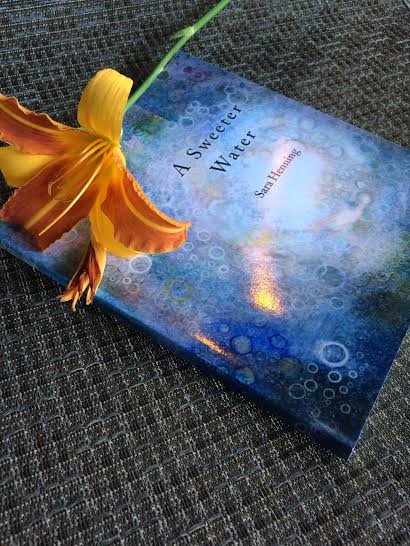
Poetry Summer Reading List Book #4: A Sweeter Water

Book: A Sweeter Water  

Poet: Sara Henning

Publisher/Date: Lavender Ink, 2013

Why I bought the book: I got the chance to hear Sara Henning speak at AWP as part of the panel The Bigness of the Small Poem (Sandy Marchetti was also a member of this panel) and after hearing her talk about her own work and then read some of it, I wanted to buy her book. She also spent some time during the panel talking about the poem “Song” by Brigit Pegeen Kelly, which is a favorite of mine.

What I admire about this collection: There were two things that struck me the most about A Sweeter Water. I greatly admire the way that Sara writes about women and being a woman and all things female. I spend a lot of time in my own poetry examining myself as a woman and I write a lot about other women in my life, and I often struggle to find authenticity in the subject matter. I don’t want to come off as patronizing or overly sentimental or cliched, so the middle section of A Sweeter Water where there are poems titled “How to Make Babies,” “First Striptease,” “First Kiss,” “Girls Like Us” & “How to Pray Like a Girl” (just to name a few) really resonated with me. I think what drove it home for me was that I wanted to share these poems and share them with my students and my sister and my mother and my best friend. They’re beautiful and sexy and heartbreaking and full of grit.

unnamed

The other part of the collection that struck me was that Sara really knows how to end a poem. This is something I struggle with constantly, so as I started to read my way through the book, I took notice of the fact that I was constantly feeling a punch in the gut every time I finished a poem. The endings linger in your mind, which I think is what want them to do.

Favorite lines: “Memory, a roof with sheeted tin, is a mosaic of insulation, bends under the weight” (15). “…their tight jeans, stomach sunk/below where sharp hipbones/as though a bit of their souls were meant/to cradle there” (49). “We all enter the world/as no one’s drunk angel, drunk on pain, expecting to be loved” (55). “Asters that never knowing the dirt by feel, learn to root in the wind” (34).

Favorite poems: “Birthday,” “How We Love,” “Three Themes On Rescue,” “As Though the Stars Could Keep Us,” “Eros,” “The Last Dahlia” & “How to Pray Like A Girl.”

Links: Here is a link to the  Brigit Pegeen Kelly poem I mentioned above. There’s a note regarding this poem at the end of A Sweeter Water concerning Sara’s poem “Three Themes on Rescue.”

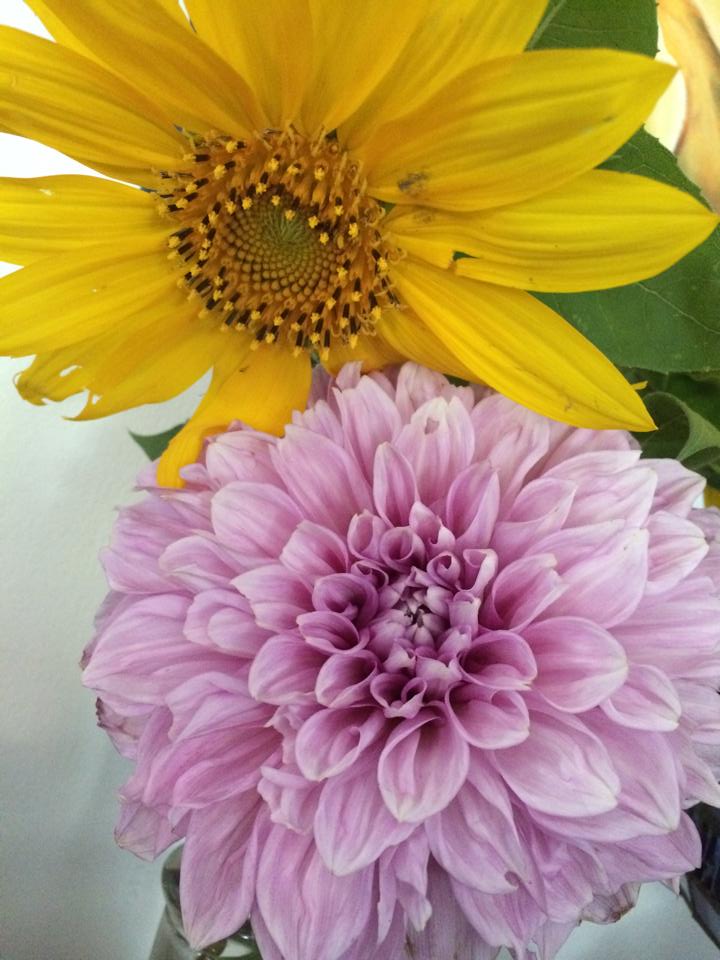
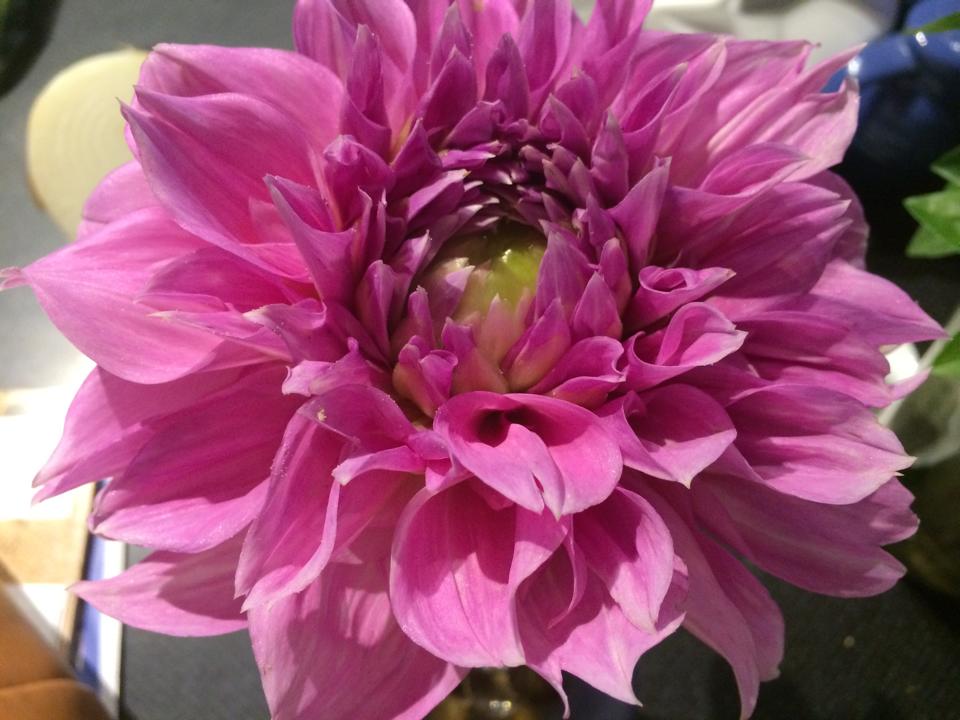
A Sweeter Water is also full of dahlias, which are beautiful, elegant flowers. I’ve wanted to grow some of my own for years, but last summer I was finally able to nurse some into full bloom:

60669_10152617810315791_5419742138465156012_n 1620762_10152576895615791_2856580120207089317_n

Previous: Streaming by Allison Adelle Hedge Coke

Next: The Well Speaks of Its Own Poison by Maggie Smith-Beehler

Poetry Summer Reading List Book #3: Streaming

Book: Streaming  

Poet: Allison Adelle Hedge Coke

Publisher/Date: Coffee House Press, 2014

Why I bought the book: Wandering around the book fair at AWP, I was perusing the Coffee House Press table and the cover of this book caught my eye because it’s gorgeous. When I picked up the book, i opened it to the poem “Drunk Butterflies” and then I turned around and bought the book.

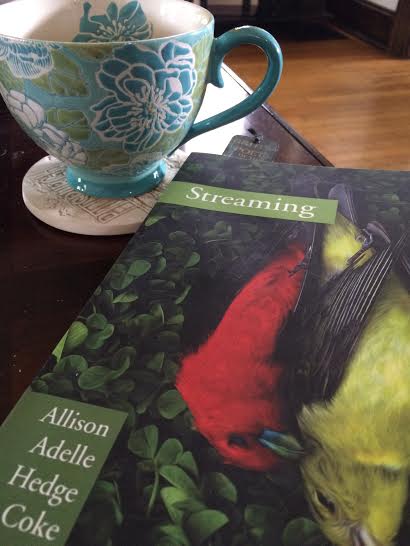
What I admire about this collection: The poems in Streaming sprawl. They are large and ambitious and full of breath. There is just so much space and that space is full of layers upon layers of language. These are poems that are about the intersection between family and history and the environment. I greatly admire Allison Adelle Hedge Coke’s ability to tackle large social and cultural issues in poems in a way that is still deeply lyrical and lovely. These poems you should linger over on your porch in the morning with a cup of coffee.

unnamed

Favorite lines: “In this world we lose/the ones who give the most” (28).  “Wrapping shyness with wing, undercover, under/folding blanket over love” (11). “Sandhill cranes rise into spiraled kettles; their mares purring  chortling kettling/vortex siege/sedge herd” (18).

Favorite poems: “Drunk Butterflies,” “Platte Mares,” Heroes,” “Pando/Pando,” “Story,” “Campos,” “Hatchlings,” “Carcass.”

Previous: Confluence by Sandra Marchetti

Next: A Sweeter Water by Sara Henning

Poetry Summer Reading List Book #2: Confluence

Book: Confluence 

Poet: Sandra Marchetti

Publisher/Date: Sundress Publications, 2015

Why I bought the book: I became familiar with Sandy’s work through a FB group I’m part of and then was lucky enough to meet her at AWP. I attended the panel she was a member of and then was able to meet her face to face while she was signing books at the book fair. Sandy is a lovely person and an intelligent, talented poet. She also has a beautiful voice. If you get a chance to hear her read her work, you should definitely check it out.

What I admire about this collection: For me, reading Confluence, feels like slipping into a beautiful, loved piece of clothing. These poems are carefully crafted artifacts that examine memory, emotion and experience through a unique lens but at the same time there is something wonderfully familiar about the way that the poems come together. The pbookoems that take on domestic tasks like washing the dishes or eating lunch or walking through a room are some of my favorites in the collection because while they are interesting and lyrical and new in language and line, they are also subjects that I relate to and write about. In other words, reading this book was like finding my tribe. It’s similar to how I felt when I read Elizabeth Bishop for the first time. Incidentally, the epigraph for Confluence is from Bishop’s “At the Fishhouses.”
I also love the recurring imagery & themes of birds, water, light and skin; love, identity, landscape and memory.

Favorite lines: “We rub eyes until/we’ve made owls/of each other:/under the lurching/fur of eyebrows,/of blue and green/of our slight glows,/flicks out and open” (20).  “Curved like nautilus shells,/milk-white with golden ribbing,/our spines slope to the sink;/we bow over the warmed water” (51).

Favorite poems: “Blue-Black,” “Skyward,” “Music,” “Hollow,” “Saints,” “Pilgrims,” “Fissures” & “Walk Through.”

Links: When I read the epigraph for Confluence, I was a reminded of a line from another Bishop poem, “Sandpiper” that I used as an epigraph for my poem “Snail Shell.” The line reads “The world is a mist. And then the world is/ minute and vast and clear.” The poems in Confluence bring a clarity to the subjects they examine. They allow the reader to fully immerse themselves in the experience, so you finish the poem feeling like you’ve unearthed a treasure that you can slip in your pocket and carry with you.

Previous: Octopus Game by Nicky Beer

Next: Streaming by Allison Adelle Hedge Coke

Poetry Summer Reading List Book #1: The Octopus Game

Book: The Octopus Game

Poet: Nicky Beer

Publisher/Date: Carnegie Mellon University Press, 2015

Why I bought the book: I met Nicky Beer while I was working on my MFA at Murray State University. In fact, if I remember correctly, I think she shared a poem or two from this manuscript during one of the residencies I attended toward the end of my degree. Nicky is brilliant and kind and she was also at AWP this year, so I got to see her again, which was delightful.

What I admire about this collection: There is so much to admire in Octopus Game, but I think what I like best about all of these poems is they way Nicky uses language to craft thick, layered images that feel like paintings. When I read these poems I feel like I’m reading art. The poems are ornate, weighty and beautiful. I’m not ashamed to say that I had to look up many words while reading these poems. Just a sample: polygot, mesalliance, chromaphores, epicenes, penury, labella, petioles, diastoles, cicatrix & guywires. So I should also thank Nicky for inadvertently making me smarter. I also appreciate that while Nicky’s poetry is meticulously executed and extremely intelligent, it is also accessible and humorous. It may seem somewhaunnamedt limited, but when I read poetry collections I often wonder if there are poems I could share with my students and these are poems they would love to read.
Favorite lines: “Today, love will be like starlight:/when it arrives, whatever it comes from will have already collapsed,” “Black Hole Itinerary” & “A poem like being born/behind a dead bird’s heart,/eating your way into the light,” Oblation.”

I could just list the entire book, but that’s silly, so just take my word for it and buy it so you can immerse yourself in all the gorgeousness.

Favorite poems: ” Octopus Vulgaris,” “Boys in Dresses,”Pescados De Pesadillas,”Nature Film, Directed by Martin Scorsese,” & “Harvard Med Field Trip.”

Again, I loved the whole book. See above.

Links: When I read Octopus Game I was reminded of the poem “Cephalata” by Anna George Meeks in her chapbook Engraved. I’m also a big fan of nature documentaries. I have been since I was five years old sitting on my grandfather’s lap and watching Nature on PBS. Recently, I’ve revisited two of my favorite nature documentary series Life & Planet Earth, and while reading Octopus Game I was reminded of this clip:

As a new mother, I’d also mention watching this clip while feeding a screaming newborn gives it a whole new meaning.

Next: Confluence by Sandra Marchetti

Poetry Books: A Summer Reading List

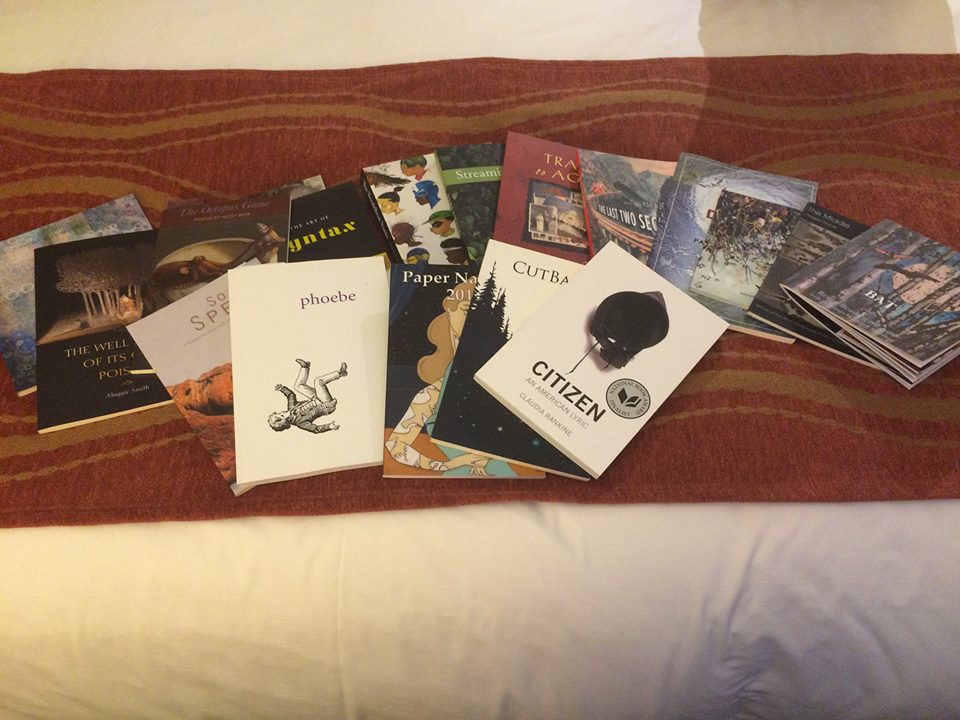
I came back from AWP with a massive amount of poetry collections. When it comes to books, I have poor impulse control (understatement of the year) but there were a lot of poets at AWP that “I knew” either through previous interactions (MA, MFA, readings, etc.) or who “I met” through Twitter, FB and Binders, so again, I had to buy their books and get them signed. I had to.

My intentions after returning from AWP were good. I would finish out the spring semester and then bury myself in the lovely pile of books that I stacked on my dining room table. Guess what? It’s June 17th and the pile is still there. Untouched. The major reason for this literary neglect is that I thought I had a solid three weeks of reading time from the end of the spring term, May 11th, to June 4th when my son, Cameron, was supposed to be born.

Let me reiterate: his due date was June 4th. When did he show up? May 16th.

So, yeah.

Anyway. I’ve found that mornings, after Cam eats and goes back to sleep, are prime time for poem drafting/ revising/reading, so I am finally prepared to tackle that stack of books that is taunting me from across the room. I’ll be posting about each book (I’m hoping to average a book/chapbook a week) because I know that most of the time I come to poetry collections through recommendations from other poets.

Stay tuned.

11149352_10153149134695791_7562234780810747246_n