Friday (Submission) Musings

As I mentioned earlier this week, I’ve been preparing packets of submissions to go out. I’ve noticed a couple of things while researching journals that I think are interesting.

First, as far as I can tell, not as many journals are moving to online submission as you think. I still have to send hard copies to most places. In fact out of the twenty some journals I have as possibilities, I think only two or three use online submission. Also, those two or three are online journals.

Two, who doesn’t take simultaneous submissions? Not many people, but there are still a few. I know my opinion doesn’t count for much, but I think not accepting simultaneous submissions is a mistake. I know that if I come across that line in the submission guidelines, I don’t even bother to send my work. Let’s face it, it still takes many journals a couple of months to read through submissions. I’m not going to let someone hold my work hostage. Especially when there are no guarantees. As a side note, I noticed a lot of places will accept simultaneous submissions from prose writers but not for poets…

Three, the “what we’re looking for sections” on most journal websites are still frustrating. I genuinely appreciate it when journals try to give writers and idea of what they’re looking for. But, (you knew it was coming) this is only useful when it actually tells you something about the journal. All journals want to publish new and unique poetry. Who doesn’t?

I’m sending packets out next week.
__________________________________________________________________


Ms. Rosalia, 54, is part of a growing cadre of 21st-century multimedia specialists who help guide students through the digital ocean of information that confronts them on a daily basis. These new librarians believe that literacy includes, but also exceeds, books.

UNC creative writing professor and poet Michael McFee has won the 2009 James Still Award for Writing About the Appalachian South.

Thursday (I Awoke to a Dusting of Snow…) Musings

The temperature dropped drastically last night. In fact, when I took Kweli out at 9, it was sleeting. He was not impressed. He walked about 50 feet away from the door and then proceeded to shake his head vigorously for five minutes. My thoughts exactly.

It’s official. I don’t like attitude. Just so everyone knows.
___________________________________________________________________

Break-up Poetry

And if more people break up after hearing his poetry, Arnold, who is himself divorced, can relate. The difference between offering your poetry to an audience and offering your heart to someone you desire, he said, is small.
“Whether in writing or in love, it’s a similar gesture,” he said.


Wednesday (Rainy) Musings

It’s a dark, rainy morning in the Midwest. Really, this is the kind of day that would be better spent at home, under a blanket, watching a movie. Instead I’m sitting here in my classroom listening to my students click away on their keyboards.
_______________________________________________________________________

I would like to extend my congratulations to Pamela Johnson Parker and poet and friend of mine. Sunday she received notification that she’s been nominated for a Pushcart Prize.
_______________________________________________________________________

Food for thought:

Poetry exists to break through to below the level of reason where the angels and monsters that the amenities keep in the cellar may come out to dance, to rove and roar, growling and singing, to bring life back to the enclosed rooms where too often we are only “the living and partly the living.”

May Sarton
___________________________________________________________________

I spent the better part of four hours last night compiling a list of journals to send my work out to. AWP left me feeling energized and cautiously optimistic. It’s a jungle out there, but the only way to get anywhere is to suck it up and jump in. I know that a few months from now when the rejections start rolling in, my cautious optimism will be replaced with full blown despair, but in the meantime I’m trying to focus on the positive.

A friend gave me a compliment today while we were commiserating about the woes of getting your work “out there.” He said, ” Writing my friend, I’m thinking about your poetry, and actually, I miss it. It always made me feel good, reading it, not like so much muck poets tend to shoot for these days. Yours is like lotus poetry, blooming white and clean even if it’s rooted in mud.”

Thanks, Sam. I hope someone else thinks so too.

Friday (Finally) Musings

English Sonnet

London returns in damp, fragmented flurries
when I should be doing something else. A scrap
of song, a pink scarf, and I’m back to curries
and pub food, and long, wet walks without a map,
bouts of bronchitis, a case of the flu,
my halfhearted studies and brooding thoughts
and scanning faces in every bar for you.
Those months come down to moments or small plots,
like the bum on the Tube, enraged that no one spoke,
who raved and spat, the whole car thick with dread,
only to ask, won’t someone tell a joke?
and this mouse of a woman offered, What’s big and red
and sits in a corner?
A naughty bus.
Not funny, I know. But neither’s the story of us.

Chelsea Rathburn from Poetry February 2009
____________________________________________________________________
Another piece of information in the growing saga that is is the disappearance of the book:
In a move that could bolster the growing popularity of e-books, Google said Thursday that the 1.5 million public domain books it had scanned and made available free on PCs were now accessible on mobile devices like the iPhone and the T-Mobile G1.
This is the quote that closes the article: “Consumers will trade a certain amount of quality for convenience and cost,” said Michael Gartenberg, an independent technology analyst.
____________________________________________________________________
I’ve been following the blog chronicling the first 100 poems written for the first 100 days of the Obama Adminstration. After all the hoopla surrounding Elizabeth Alexander’s reading, I thought I’d take a stab at it. Alexander’s poem is accomplished. Mine is not. This is a first draft, and I wrote it last week. It isn’t supposed to be anything but a poem I tried to write (that’s my generic disclaimer).
Voices

The halls vibrate with shared voices.
Students crowd outside classrooms, looking
up from their iphones, tucking MP3 players
back into their pockets. Pressed together, they read
copies of the Indianapolis Star, spread open and held
by many hands, murmuring quotes and figures.

Pushing into class, they ask questions
about speech, poetry, and prayer. Across
the street, grown men emerge from the auto
labs to watch the televisions set up outside
the cafeteria. They returned to school for
promotions but just yesterday a Honda plant
closed in Greenwood and now these men
clutch class schedules in their hands wearily
reading descriptions about engineering, accounting,
and communications.

A woman stands in front of the largest T.V. Her
hair is a pure white cloud held in place with pins.
She is studying Spanish and often strolls the halls
of our department, a thick wooden walking stick
stomping out her arrival. Her eyes are still, caught
in a clear gaze, but her lips tremble as the cameras
pan out to the audience.

The audience all wrapped up in wool, cotton, and
down but underneath they speak Spanish, French,
and Afrikaans. They oil engines, they build bridges,
and they crunch numbers. This audience studies literature,
religion, and history. They sing hymns, pop songs, and opera.

This audience and this student are waiting,
waiting for his voice to come forward
and rise above the cold.

Friday (Cooking!) Musings

RJ has created a blog to document Greg’s progress throughout his recovery. This is the link to the page.

My creative writing class was great again last night. We talked about voice and character in writing. I devised this exercise where I gave my students four index cards. One card had a name, another an age, another an occupation, and the final card had one or two personality traits. Then I put the students in small groups and asked them to put their characters in a situation together so they could interact. They seemed to enjoy it and begin to understand how to make a character.

The snowstorm we got on Tuesday/Wednesday morning continues to be annoying. The owners of our apartment building came during lunch yesterday and plowed out the parking lot. This is awesome, but of course the only person who didn’t move their car was the girl who parks next to me, so when I got home last night I still couldn’t park in my spot. I switched with RJ and he parked on the street.

Today is my first cooking class at school. I’m really looking forward to it.
___________________________________________________________________

I will be watching the Superbowl this weekend. The Steelers are RJ’s team, so in that spirit here is probably one of the few sports related articles you’ll see on this blog.

Myron Cope left behind something far more personal than a legacy of terrycloth, a battle flag for a city and its team. In 1996, he handed over the trademark to the Terrible Towel to the Allegheny Valley School. It is a network of campuses and group homes across Pennsylvania for people with severe intellectual and developmental disabilities. It receives almost all the profits from sales of the towels.

____________________________________________________________________

I’ve started following the blog Starting Today: Poems for the First 100 Days. I like the concept and I think I might try it myself. I’m not expecting anything, but I think it’s worth thinking about. I’ve linked to this page under my Links section.

I like the one posted yesterday:

Day #10: John Paul O’Connor

New Time Old Time

The unchosen have always been the starbeams
for the poor, the tortured and beaten, the homeless,
the suffocated. They have been the wind that bursts
open poppies in an endless field, just as this morning
the January wind blew the seeds of this poem jotted
down with coffee 3 days before my daughter’s 39th birthday.
She is, at this moment, in a classroom downtown studying
nursing, while her daughter, my little Izzie, sits
at Wanda’s Daycare spilling blocks onto the carpet
with no awareness of the children’s blood spilling
in the Congo while fathers’ heads are crushed
like brittle stone and mothers’ bodies are torn open
by monstrous attackers, children they, all written
off as lost Africa which will remain lost for the next 100
days as it has for the past 300 years. It’s a tell of people
my age when you hear us say, I’ve seen this before,
Camelot and the revolution just around the corner.
Today my around the corner is the Fine Fare,
where I pick up milk, orange juice and peanut butter
for my girls before getting back to work.
I’m lucky to have work, I’ve heard a dozen people
tell me in the past week. The Dominican check-out girls
have no union though surely they thirst for something
greater. I can’t know. I don’t speak their language.
I am one of those who has sat at the bar with his whiskey,
whispering to himself on an unchosen night, I was born
too late,
thinking I might have liked to have lived through
the Depression and now it looks as if I will get my wish.
But will I get my FDR? No I will get my Obama,
the first president to have a name that begins with O.
O, Obama, be not the chosen, but the unchosen
of the unchosen revolution, not around the corner
but here on St. Nicholas Avenue where the swollen tribes
of unchosen are chanting, Africa come home, and raising
their sunbroad arms to demand of you to be what they believe
you are.

John Paul O’Connor resides in New York City and in Franklin, NY. His poems have appeared recently in Indiana Review, Eclipse, Lilies and Cannonballs and Rattle, on whose website you can hear him read his poem, “Stone City.” John hopes we will all do what Obama has urged us to do, which is to keep the pressure on to make sure he is the president we want him to be.
____________________________________________________________________
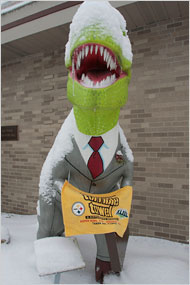
Saturday (Dickinson and Galileo) Musings

This afternoon I went to our first Speaker Series event at school, An Afternoon with Galileo and Emily Dickinson. It was an interesting program. The play was based of the PBS series that Steven Allen put on. I’ve never seen the television episodes (they’ve long since gone off the air) but I like the idea of a “meeting of the minds.” I’m not sure that Emily Dickinson would have come off as forceful as the woman who portrayed her, but it was a nice way to spend a few hours on a Saturday afternoon.
____________________________________________________________________

I discovered the website Wordle and I’m slightly obsessed with it. Try it out. Below are a few of my poems…
Here’s my blog:

Friday Musings

My class last night was excellent. There are about fifteen students and they all have a really good energy. They asked lots of questions and the three hours moved quickly. I’m both pleased and relieved. A three hour block for a class can be painful if the students are not involved, so hopefully this trend will continue.

My meeting with the librarian also went well. I secured the display case for our novel display for March. I wanted to get this display up last semester, but I’m glad that the posters will be displayed along with the student reviews. I also found out about the newly revamped poetry contest that the library is sponsoring and I may end up being a judge, which is neat.
_____________________________________________________________________

In the January issue of Poetry, there is an interesting essay by Clive James. He spends a lot of time talking about Stephen Edgar, and I wish he’d spent more time talking about the concept I’m going to excerpt here:

When reacting to a poem, the word “perfect” is inadequate for the same reason that the word “wow” would be. But it isn’t inadequate because it says nothing. It is inadequate because it is trying to say everything. On a second reading, we begin to deduce that our first reading was complex, even if it seemed simple. Scores of judgments were going on, too quickly for us to catch but adding up to a conviction—first formed early in the piece and then becoming more and more detailed—that this object’s mass of material is held together by a binding force. Such a binding force seems to operate within all successful works of art in any medium, like a singularity in space that takes us in with it, so that we can’t pay attention to anything else, and least of all to all the other works of art that might be just as powerful. We get to pay attention to them only when we recover.

I think this gets at the larger question of how do we talk about poetry? This is a very important question to me as a poet and a teacher. How do we find the language to talk about what moves us? What we respond to? I think that many students are intimidated by poetry because they don’t know how to talk about it, and is there a right and wrong way? Also, this essay addresses the issue of moving beyond the first reading of a poem. I know I’ve read poems the first time and been completely taken with them, only to find more to like upon a second reading. This also can have the reverse effect.

Thursday (Winding down…) Musings

It is the end of my week. Unfortunately, I’ve made myself work for the end of my week. I have office hours till 3, then I have a meeting with one of the librarians, then I have our first blank page meeting of the semester, and last but not least I have to come back at 7 and teach my creative writing class. The first week back is always difficult. It takes me awhile to teach my body that 6 am is a reasonable time to get up in the morning. However, I feel all this is worth it in order to not come in at all on Fridays. Also, Monday is MLK day, so I have a four day weekend. I’m ashamed to say I’m looking forward to it.

A colleague introduced me to theradio.com and I’ve been listening to it at the office. Good stuff.
___________________________________________________________________

Nikki Giovanni has a new book out all about love. It’s called Bicycles: Love Poems and this poem appears in it:

We Are Virginia Tech

We are Virginia Tech
We are sad today, and we will be sad for quite a while. We are not moving on, we are embracing our mourning
We are Virginia Tech
We are strong enough to stand tall tearlessly, we are brave enough to bend to cry, and we are sad enough to know that we must laugh again
We are Virginia Tech
We do not understand this tragedy. We know we did nothing to deserve it, but neither does a child in Africa dying of AIDS, neither do the invisible children walking the night away to avoid being captured by the rogue army, neither does the baby elephant watching his community being devastated for ivory, neither does the Mexican child looking for fresh water, neither does the Appalachian infant killed in the middle of the night in his crib in the home his father built with his own hands being run over by a boulder because the land was destabilized. No one deserves a tragedy
We are Virginia Tech
The Hokie Nation embraces our own and reaches out with open heart and hands to those who offer their hearts and minds. We are strong, and brave, and innocent, and unafraid. We are better than we think and not quite what we want to be. We are alive to the imaginations and the possibilities. We will continue to invent the future through our blood and tears and through all this sadness
We are the Hokies
We will prevail
We will prevail
We will prevail
We are Virginia Tech

This poem interests me because in my thesis defense we briefly talked about handling social and political issues in poetry and how important it is. I admire what this poem is trying to do, but I’m not sure it does it. The language doesn’t seem strong or lyrical. Also, the entire poem seems expected. I understand the form and I understand the intention, but I think it could be more.

W. D. Snodgrass, who found the stuff of poetry in the raw material of his emotional life and from it helped forge a bold, self-analytical poetic style in postwar America, winning a Pulitzer Prize for his debut book, died on Tuesday at his home in Erieville, N.Y., in rural Madison County. He was 83.

Monday (First Day of Class)

I arrived at school at 7 am this morning. I was bit surprised to find that I was the only one here when I got off the elevator. I must be one of the few poor souls who volunteered to teach 8 am classes. A lot of people (students included) groan about the 8 o’clock hour, but I like it. I’m done teaching by 11 and I can spend the afternoon grading, doing paperwork, or counseling students. This also allows me to leave early enough in the day, so that I can go home and actually get things accomplished.

My classes went well this morning. There appears to be some good energy.
___________________________________________________________________

The First Line is the Deepest

Kim Addonizio

I have been one acquainted with the spatula,

the slotted, scuffed, Teflon-coated spatula

that lifts a solitary hamburger from pan to plate,
acquainted with the vibrator known as the Pocket Rocket

and the dildo that goes by Tex,
and I have gone out, a drunken bitch,

in order to ruin
what love I was given,

and also I have measured out
my life in little pills—Zoloft,

Restoril, Celexa,
Xanax.

I have. For I am a poet. And it is my job, my duty
to know wherein lies the beauty

of this degraded body,
or maybe

it’s the degradation in the beautiful body,
the ugly me

groping back to my desk to piss
on perfection, to lay my kiss

of mortal confusion
upon the mouth of infinite wisdom.

My kiss says razors and pain, my kiss says
America is charged with the madness

of God. Sundays, too,
the soldiers get up early, and put on their fatigues in the blue-

black day. Black milk. Black gold. Texas tea.
Into the valley of Halliburton rides the infantry—

Why does one month have to be the cruelest,
can’t they all be equally cruel? I have seen the best

gamers of your generation, joysticking their M1 tanks through
the sewage-filled streets. Whose

world this is I think I know.

courtesy of Poetry January 2009

I like this poem. A lot. Partly because it is clever. Partly because of the pop culture references. Partly because it is brave. Mostly because it is honest. It is a poem made out of the stuff of our current world.
____________________________________________________________________

This is too perfect. I like the question posed at the end of this article. I’m going to think on it.

In the face of his arrest on federal corruption charges, Mr. Blagojevich offered Rudyard Kipling’s “If.”

If you can keep your head when all about you
Are losing theirs and blaming it on you,
If you can trust yourself when all men doubt you,
But make allowance for their doubting too;
If you can wait and not be tired by waiting,
Or being lied about, don’t deal in lies,
Or being hated, don’t give way to hating,

Understandably, he left out the last line of the stanza:
And yet don’t look too good, nor talk too wise.

Too bad poetry is still getting the short end of the stick:

The proportion of adults reading some kind of so-called literary work — just over half — is still not as high as it was in 1982 or 1992, and the proportion of adults reading poetry and drama continued to decline. Nevertheless the proportion of overall literary reading increased among virtually all age groups, ethnic and demographic categories since 2002. It increased most dramatically among 18-to-24-year-olds, who had previously shown the most significant declines.