Teaching Challenges at a Community College: Student Time Management

I have written before about the contrast between the student I was during my undergraduate career at Allegheny College and the students I teach at my community college. In some ways, our experiences are similar but mostly, they are vastly different. When I was an undergraduate, I worried about my coursework, my roommate, my sorority, my extracurricular activities and what party I was going to on Friday night. This is not to say that I didn’t deal with heavier issues, but my one and only job when I was in college was to be a student. That was it. My students are not just students; they are parents and employees. Their jobs are many and their responsibilities are great. Their situation is no better or worse than mine was but it is different.

These differences are often the topic of conversation in the office between colleagues and most of the time these conversations wind up falling onto the subject of time management. Faculty, advisors, administrators and staff spend a lot of time thinking about how to help our students in this area, but it is a never ending battle. It is particularly difficult because of the unique nature of the problems our students incur. There is never a simple solution and just when you think you’ve solved one issue for one student, another one rears its head. 
The issue of time management is complex for our students. I find that part of this problem stems from the fact that my students are not quite sure how to be students. They don’t know what it means to come to class, engage in the class, take what they’ve learned from class, go home and apply that classroom knowledge to homework and then come back to class and discuss those assignments. They don’t know how to do this because they lack skills in active listening, reading comprehension, note taking, class discussion, collaborative work, etc. This is not to say they are not smart or willing or enthusiastic. They are all of these things, but they don’t have the basic skill set and that can prove to be quite an obstacle to overcome. Why don’t they have these skills? Some of it is a question of their previous educational experience. If they are coming from high school programs that were overcrowded or underfunded or understaffed (most likely all three) they may have slipped through the cracks. Another common case is that this student is a returning adult and the last time they were in the classroom was thirty years ago. Needless to say, the classroom as changed a lot in thirty years. In addition to the skills above, these returning students also struggle with the technology. They have to do assignments online, type papers on word processing software, and interact with platforms like Blackboard. It’s a lot to take in. 
The other issue with these skills is while they contribute to the overall problem of time management, they also exacerbate the problem. It’s a vicious cycle. For example, if a student has a problem with note taking, they can hire a tutor, or go to a student success workshop, or seek help from a peer or their professor. However, in the time that it takes for them to realize they need help with note taking and then in the time that it takes for them to put the necessary steps in place to fix that problem, they’ve already fallen behind. This is also assuming that the problem in question is easily fixed. However, it may take students several weeks or even an entire semester to get the hang of note taking. In the meantime, what does their performance in your class look like? 
This lack of basic student skill is definitely a problem, but in my opinion it is not the difficult part of the problem to solve. Why? Well, because we as members of an educational institution have resources at our disposal to help with these types of issues. While our resources are often stretched and far from perfect, they are present and available. I can send my students to the writing center, I can arrange that they get a note taker, I can set up study groups with their peers, etc. In my mind, the tricky part of this time management problem is that piece that I have no control over: their personal lives. 
It is easy to dismiss a student’s personal life as “not your problem” or “not my job” and move on from there. After all, what can you do if this students car breaks down? If they are evicted? Kicked out of their house? If their child, mother or grandfather is hospitalized? If they are hospitalized, arrested, deported or otherwise incapacitated? If they lose their jobs? If they are going through a divorce or battling a terminal illness? 
It is true that I am not a medical professional. I am not a psychologist and I know I am not equipped to deal with half the issues that my students deal with on a regular basis. I am painfully aware of the fact that some of my students deal with more in a single week than I probably dealt with my entire four years in college. How does this relate to time management? Well, as we were discussing in my office the other day, it is difficult to focus on a history test or a set of math problems when you’re not sure how you’re going to pay rent next month. When you are staring down the prospect of living in your car (and this did happen to a student of mine), dangling modifiers seem slightly less important. It would be one thing if this one or two students or even five over the course of the term, but it’s not. The problem is that our students are (sometimes to their detriment) determined to succeed. They do not believe in “stepping back” or “re-evaluating” or “coming back when things are better.” They want to push through. They want to prevail. Succeed at all costs. 
The position of professor becomes especially tenuous when you have students who do prevail, because then how do you handle the rest? Several years ago I had a student who suffered from Lupus. She was in constant discomfort and she struggled to attend class regularly. However, she was bright and determined and despite her constant pain and exhaustion, she came to class prepared, participated in outside study sessions, worked with her peers and ended up with an A in the course. I was constantly concerned about her physical well-being but she proved that she could manage her time and her illness, and who was I to say otherwise? However, not all students are that student and sometimes you have to have an honest conversation with yourself about what you can realistically handle. What I find difficult is being the one to facilitate that conversation. And as some of my colleagues have wisely acknowledged, “sometimes a student has to learn the hard way.” 
So what do I do to “help” this problem? I pay attention and try to remain pro-active. If a student begins to slip, even a little bit I try to nip it in the bud right from the start. Admittedly this approach yields mixed results. At the end of the day, a student has to be willing to take the help they are being offered. Sometimes this takes more than one pass at an an assignment or even an entire course, but if they figure out that “weakness” is really just learning, they leave me with something valuable: growth. 

The Poetry of Sunken Ships

Today’s poetry post begins with more good news on the publication front. My poem “Wake” will appear in the Fall 2013 issue of Scapegoat Review and my other poem, “Starling,” will appear in the Winter 2013 issue of The New Plains Review. I’m very pleased that these poems found homes in these fine publications.
____________________________________________________________

I completed MFA at Murray State University in 2009 and this past week Murray made the news. Currently Murray’s low-residency program is ranked seventh in the nation by Poets & Writers Magazine. My time at Murray was an incredibly positive and valuable experience for me as a writer, a student and a professor. I meant talented, dedicated and hard working writers who I’ve had the pleasure of keeping in touch with long after I stopped making my twice annual treks to Kentucky.

Speaking of talented poets, my good friend Natalie Giarrantano recently released her debut collection of poetry, Leaving Clean. The poems in this book are haunting, unsettlingly memorable to the point where the lines linger in your heart long after the poem is finished and you’ve moved on out into the world. I plan to write more about this book in a later post, but you should buy it. It’s beautiful work.
______________________________________________________________

In the past few weeks the Costa Concordia has been back in the news. When the cruise ship originally wrecked off the Italian coast in January, there was talk of blasting it apart with dynamite. However, instead the authorities elected to leave her on her side until recently when they righted her giant white body in a 19 hour process called parbuckling. I began writing a poem about the ship when the story originally broke last winter, but then the draft sat quiet for several months. This week I took it out again and started to revise. It’s basically turned into an elegy, which isn’t particularly surprising. Many of my poems are elegies of sorts. I seem to gravitate towards them. I don’t think I’ve quite figured the structure of the poem yet, but these are the opening lines I’m currently working with: “When she punctured her smooth, white belly on the sharp/reef, I was driving to the pool hearing that Concordialay trapped/in the Tyrrhenian, soon to be drained and blown to pieces.”


I’m going to keep working on it. We’ll see where it goes. 


Unexpected Blooms

My return to “Photo Friday” 

One of the perks of finally being in a office with a window is that I got to bring in one of my house plants. What kind of house plant you ask? Good question. I have no idea. I also had no idea that this plant could produce flowers, so you can imagine my surprise when I walked into my office on Monday and saw eight of these waxy flowers adoring my plant.

Teaching Character: Positive & Negative Change

For several semesters, I have had the great fortune of teaching an introductory level creative writing course at my community college. The popularity of the course has increased by leaps and bounds since I began as an adjunct here in the fall of 2006. As a full time faculty member, I am privileged to teach two or three sections of the course a semester and it is by far my favorite course.

The class consists of covering all the basics of creative writing: imagery, voice, character, setting & story. Once the students feel like they have grasp of the fundamentals we move onto the four genres: poetry, creative nonfiction, fiction & drama. The textbook we use for the course, Imaginative Writing by Janet Burroway, is always a hit with students and is one of the few textbooks that they don’t gripe about buying. It is a challenging course to teach, especially for this poet who is seriously challenged in writing prose, but I love learning from students and discovering something new each time class time rolls around. 
Recently, we have begun to delve into the realm of character. As I often do when we reach this topic, I ask my class to provide me some examples of what they would consider “round characters.” Prior to this brainstorming session, we discuss what makes a round character. Typically, this discussion results in students deciding that “round” or “developed” characters incur significant change throughout the course of a story or television show or movie, and that is what makes them interesting and complex. Then we get to the brainstorming of examples. Here is a sample of what my students called out last class:
  • Harry Potter
  • Darth Vader
  • Charlie (Perks of Being a Wallflower)
  • Christian Grey (50 Shades of Grey)
  • Walter White (Breaking Bad)
  • Katniss Everdeen (The Hunger Games)
Clearly, this is a diverse grouping of characters and what struck me the most was 1). the pervasiveness of popular culture 2) how many of these characters embody “negative” change as opposed to positive change. 
The second observation was particularly interesting to me, so I asked my students about it: “Does all change have to be positive?” And of course, they said no and then went on to explain to me that the complexity of these negative changes are what make these particular characters memorable. There was the predictable groaning and eye rolling at the mention of both Harry Potter and Christian Grey, which made me wince a bit on Harry’s behalf. There was also a rather tense but thoughtful discussion about whether or not Darth Vader really underwent much change on his journey through the universe. Finally, it probably worth noting that Katniss Everdeen is the only woman appearing in this particular sample, but I can assure you that once some of these men came into the conversation, their female counterparts were not too far behind (Hermione Granger, Princess Leah, Skylar White* and Anastasia Steele).
As the conversation came to an end, one of my students made the observation that negative change in character development is more realistic because “that’s how real life is.” Basically, and I’m paraphrasing her comment, she said it isn’t necessarily realistic that a real life person will win the lottery or buy a new BMW or fly off to Fiji to get married. However, it is realistic that someone could lose their house or get in a car accident or deal with the death of a loved one. The idea of realism is interesting given this list of characters because many of them are operating in highly fantastical world (space, a school for wizards and a post apocalyptic America) 
While on its face these observations may seem rather obvious, I think that these comments also tells me something important about who my students are, where they come from and they type of world they are living in. Most importantly though, I think it gives me some insight into what kind of writers they will be. 
*Click on the link above to read Anna Gunn’s piece about fan reactions to her character on Breaking Bad

Odds and Ends

Fall is here at that means that it’s time to send my poems out into the literary universe once again. I’ve blogged about this process before but to sum it up, I compare it to my experiences riding horses growing up: it was fun, sometimes rewarding and often painful. However, I loved riding and I love writing, so I press on. 
A bit of good news on the submission front is that I’ve had my poem, “Wigs,” picked up for publication by Hamilton Stone Review. The poem will appear in their October 2013 issue online. I’ll post a link when it becomes available, but until then take some time and read through their previous issues. There are some wonderful poems including work by my friend, poet Larry O’Dean.
Otherwise, the fall is slowly making it’s way into Indiana. This morning is overcast and the temperature has finally begun to come down from the 90’s to the 60’s. This weekend we went to the orchard and yesterday afternoon, I dumped my impatiens,well past wilted, and replaced them with spicy scented mums. I’m pleased to report that I’ve been writing frequently and I’m happy with how some of the drafts are starting to shape up. 
I’ve thought about putting myself on a bit of “schedule” to blog, as part of my absence as of late has been because I am easily distracted and sometimes I just can’t think of much to write about, so I’ve devised a “plan” to hopefully keep me posting more:
Monday– posts should be poetry related
Wednesday– posts should be teaching/job related
Friday– posts should be photography related
These are all topics I write about anyway, but I want to get back to making time to take pictures during the week and to reflect on my teaching. It’s good for me, so I should do it more. I’ll try it out for a week or two and see how it goes.

10 Year Reunion: A List

1. Our campus is still beautiful. It is especially beautiful in summer when all the rhododendrons are blooming and the grass is green. The new buildings compliment the older, original buildings. Overall, it just makes me happy to walk around the place.

2. The people I met/knew in college were/are wonderful people. I know I’m a bit bias but I think the class of 2003 is awesome. We live all over the country. We engage in interesting and important work. We have a lot of fun and we look good doing it. Overall, we win.

3. Sleeping in a twin bed in a dorm is still best done alone.

4. Staying up until 3:00 AM when you’re 32 v. staying up until 3:00 AM when you’re 22=two day recovery period, but in both cases, it was well worth it.

5. Country Fair still tastes damn good at 1:00 AM.

6. The Whole Darn Thing is a gem and if you’re ever in Meadville, you should eat there. I’m so glad they rebuilt.

7. Beer in Meadville is embarrassingly cheap. $2.75 for a Yuengling draft? Yes!

8. Getting caught in a thunderstorm/monsoon on the way back from the bar is still fun, except now we’re smart enough to call a cab.

9. I still love visiting the bookstore.

10. Walking up four flights of stairs to get to the Theta suite is still a haul.

11. I loved Allegheny while I was there and I love it now.

Brooks Hall. 

The gator is not comfy.
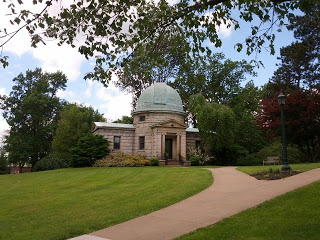
The Observatory which actually houses security. 
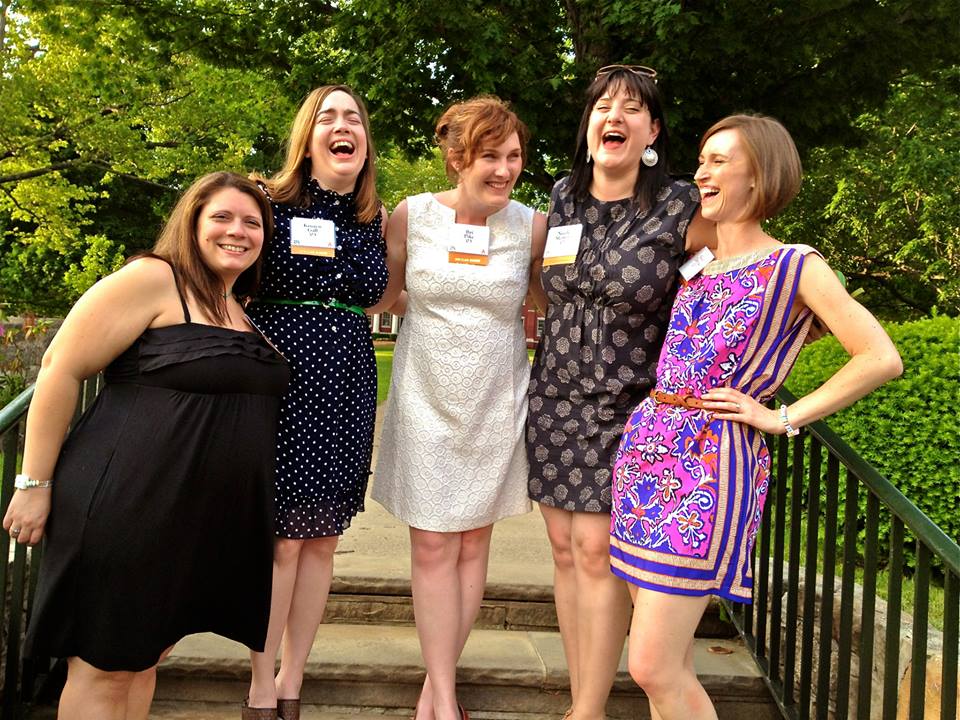
This picture captures the entire weekend. 

A Letter to Virginia Woolf

Dear Ms. Woolf,

I have a room of my own and it is crowded. Crowded with books, furniture, pictures, pencils and paper. My room is full of ideas. I guard my room closely, carefully. I fill it with peonies, poetry and photographs. My room is small: an old closet in my old house. Chipped paint on the walls and a bare, warped wooden floor. A sloped ceiling and a small latched window. I sit in my room and read. And listen. And think. And write. My shelves are full of women: Bishop, Moore, Dove and Hull. You. I open them, breathe them in, admire their genius. They are alive. Waiting.

But my room is lonely, as I’m sure you always knew. I cannot stay here forever, alone crafting, scratching out words beneath your watchful gaze. The silence presses down. Hard. At times, I am not worthy of this room. At times I am not worthy of the women that line my shelves.

At times, I am ashamed.

I am ashamed of my lack of focus. I am ashamed of the time spent away from my room. Ashamed of what I cannot write. Ashamed that I cannot write. But I am trying.

And at last, your final note, your last note to Leonard before you walked into the river, pockets full of stones, always brings me to tears. Love even in despair. You taught me that.

_________________________________________________________________________________

Virginia Woolf’s final note to her husband before her suicide on March 28, 1941:

Dearest, I feel certain that I am going mad again. I feel we can’t go through another of those terrible times. And I shan’t recover this time. I begin to hear voices, and I can’t concentrate. So I am doing what seems the best thing to do. You have given me the greatest possible happiness. You have been in every way all that anyone could be. I don’t think two people could have been happier ’till this terrible disease came. I can’t fight any longer. I know that I am spoiling your life, that without me you could work. And you will I know. You see I cannot even write this properly. I can’t read. What I want to say is that I owe you all the happiness of my life to you. You have been entirely patient with me and incredibly good. I want to say that–everybody knows it. If anybody could have saved me it would have been you. Everything has gone from me but the certainty of your goodness. I can’t go on spoiling you life any longer. I don’t think two people could have been happier than we have been. V.

A clip from the 2002 film The Hours based off of the 1998 novel of the same name by Michael Cunningham.

A Room of One’s Own

A long winter it was here in Indiana. A very long winter but now it is May. My peonies are blooming and I am on break until June 5th. The spring semester ended last Tuesday, and I spent the following days decompressing and organizing. Today, I took an hour and cleaned off my desk and made my workspace workable (it looked liked a paper factory threw up in here before) and then I decided I wanted to blog. And read. And write.

I wanted to.

As is evidenced by my blog, a hefty stack of New Yorkers, a long que on my Kindle Fire and my empty writing journals, I have not wanted to do any of these things since about February. For shame, but there’s not point in dwelling on the past.

Onward.

After I spent some time cleaning up my little office area, I went outside, cut some peonies, returned to my office and read the first two chapters of A Room of One’s Own by Virginia Woolf. I’ve read this book before, but it’s been awhile and I picked up a used copy at a yard sale last year, so I figured I’d dive right in. I like Woolf. I like her wit and her honesty. Brutal honesty. I like how she remarks, after being snubbed by two different men while visiting Oxbridge:

It is a curious fact that novelists have a way of making us believe that luncheon parties are invariably memorable for something very witty that was said. or something very wise that was done. But they seldom spare a word for what was eaten. 

I also love her beautifully descriptive images:

It was the time between the lights when colours undergo their intensification and purples and golds burn in windowpanes like the beat of an excitable heart. 

But most of all I admire her for passages like this:

Women have served all these centuries as looking glasses possessing the magic and delicious power of reflecting the figure of a man at twice its natural size. Without that power probably the earth would still be swamp and jungle. 

So here’s to a summer of reading, gardens, yoga, fresh food and words.

My own little room. 

Nimbus

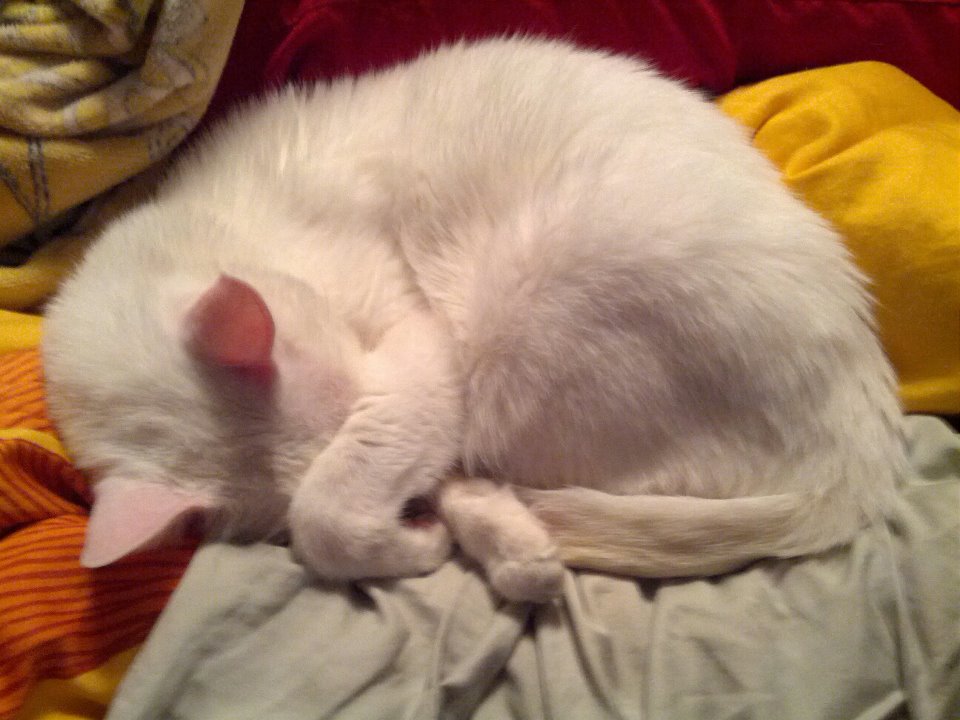
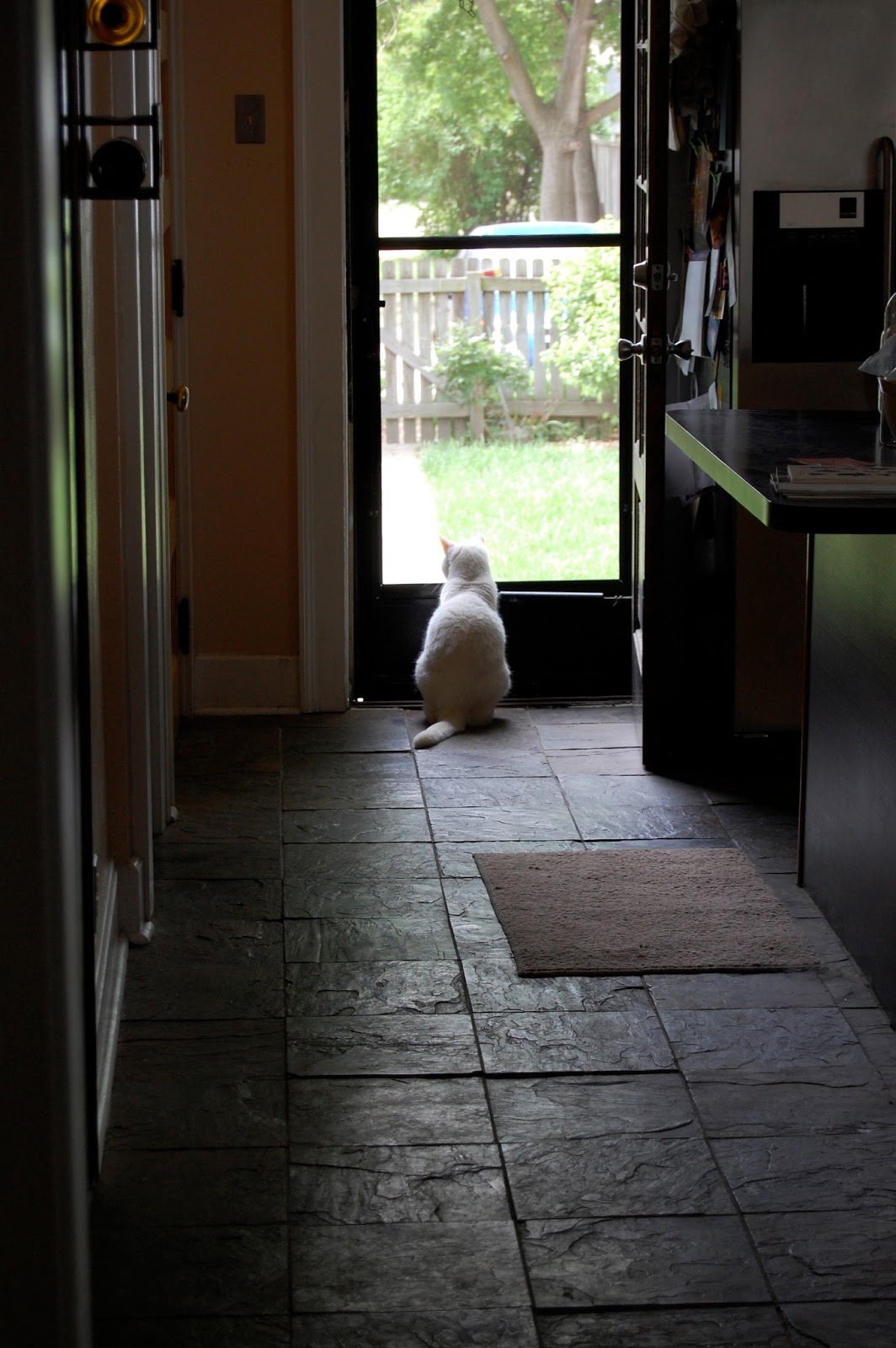
Our cat, Nimbus. 

This past Monday we had to put our cat, Nimbus, to sleep. It was difficult decision and devastating for me and my husband. Nimbus was his childhood cat and came to live with us in Indy several years ago. The loss of a pet is always difficult and this week the absence of our kitty is deeply felt. I  look for him on the back of the couch. I cried when I took a shower the other morning because I remembered how he used to come drink out of the faucet. I cried when we put away his food dish. Last night, while putting on my coat to go out to my car, I picked some white cat hair off my shoulder. Again, I cried.

I’ve had pets since I was a child. Horses, cats, dogs & bunnies. They all passed away at some point and it was always a process getting over them. They become a large part of our lives and we love them fiercely.

I hope Nimbus knows he was loved. That he is loved. Always.

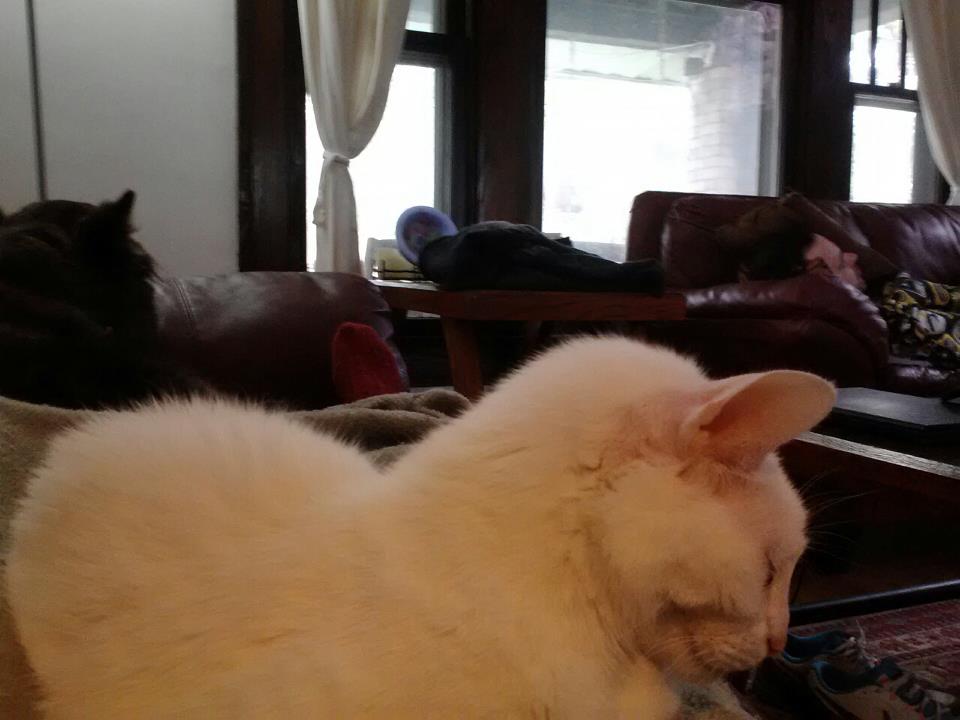
I love this picture because it sums up countless weekends at our house. Note all three sleeping animals.    

Happy kitty.

A Lovely Day for Letter Writing

Yesterday I had the privilege of participating in a Letter Writing Social at Indy Reads Books located located at 911 Massachusetts Ave. It is a lovely space and if you live in Indy and have not visited this store yet, you need to check it out.

The Letter Writing Social was hosted in part by The Indy Trade School, which is  has begun its own letter writing group in Indy called The Penny Black Society (more on that name in a minute.) The other host was The Letter Writer’s Alliance, operated by Donovan Beeson and Kathy Zadrozny. Donovan and Kathy are awesome and I’ve mentioned their stationary business, 16 Sparrows, and the LWA on this blog before. I am a member of the LWA, so I was really excited when Donovan mentioned she was going to run a social here in Indy.

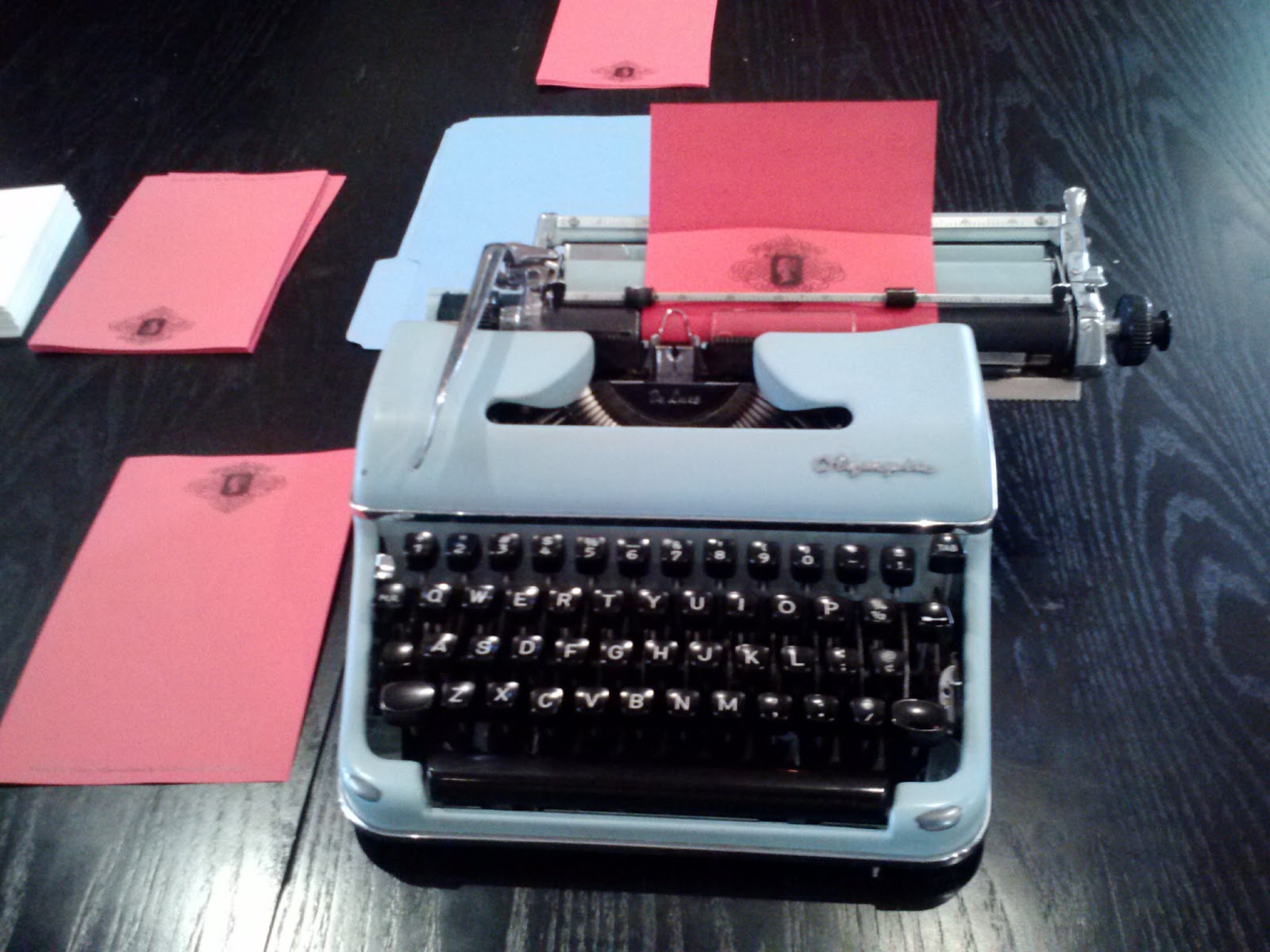
The point of the social is just to provide a venue where people can come and write or type letters. The Trade School and LWA provided materials for mail art, envelope templates, stationary and type writers. It was a good time. 


I typed a letter on this machine. The script comes out cursive. Excellent. 

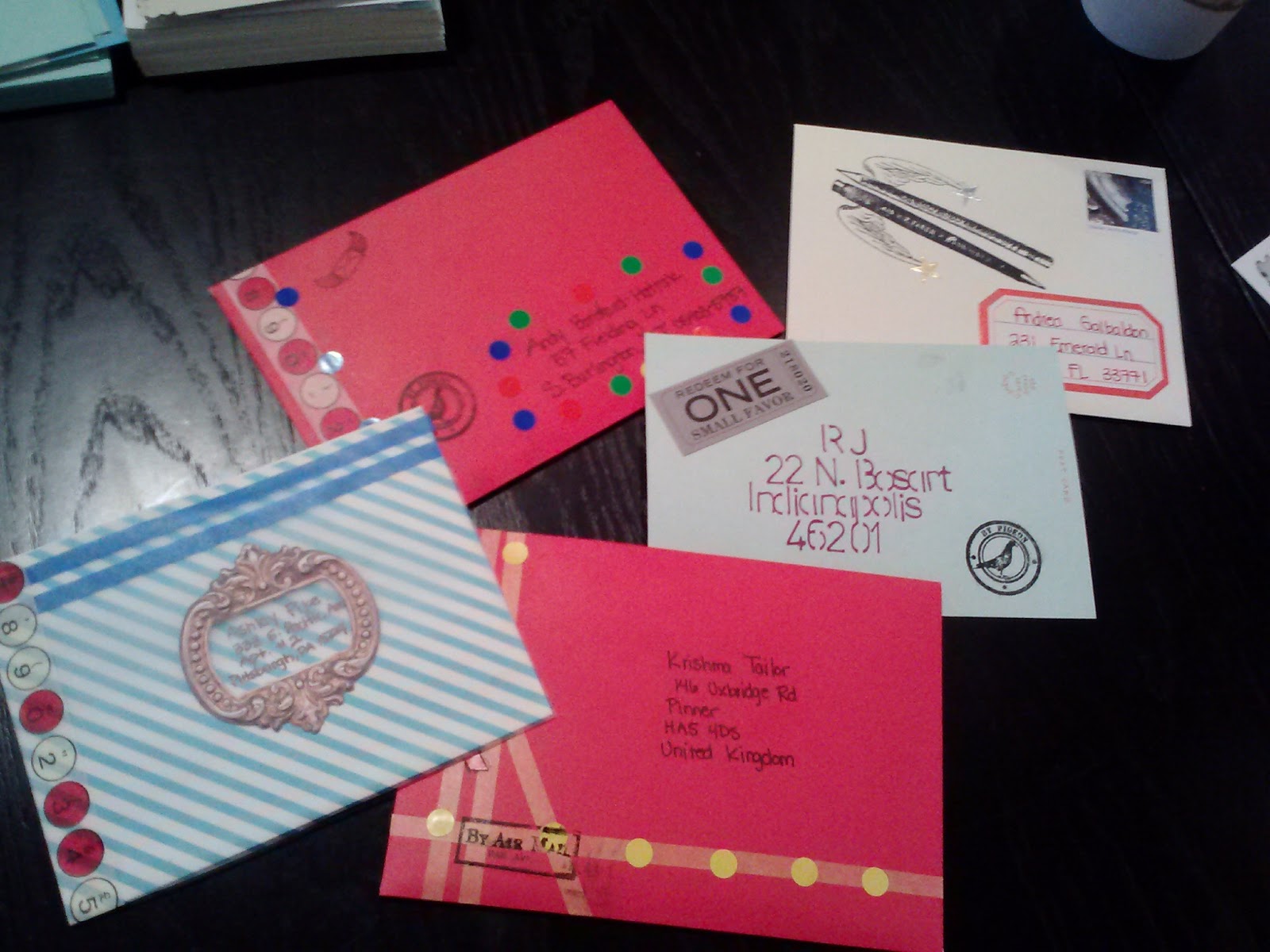
I wrote five letters while I was at the social and I met a lot of cool people from around the city. I find writing and making mail art very therapeutic and fun. Here is a sample of my finished letters:

All to be sent out on Monday. 

As I mentioned earlier, the Penny Black Society is the letter writing group that is getting off the ground here in Indy. The name comes from the first adhesive postage stamp to be used by a public postal system. It was issued in Britain on May 1, 1840. 
Penny Black Stamp.
Indy Trade School